Choosing the right dough mixer can make a small bakery faster, more consistent, and easier to scale. The best option depends on your batch size, dough type, and how often you bake.
Below, we focus on practical picks that balance power, capacity, and everyday reliability for real bakery workflows.
Best 10 Dough Mixer for Small Bakery Business Picks for 2026
Dedicated dough kneader
BOOROS Dual-Rotate Dough Mixer - 750W 10.5Qt Kneading Machine
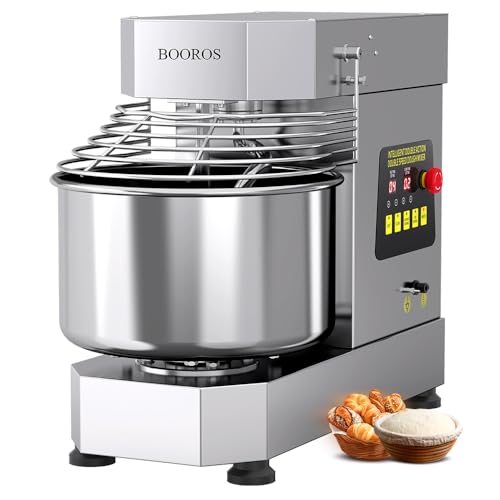
- 750W motor with dual-rotation kneading
- Handles 2.2-11 lbs of flour per batch
- Safety shield with automatic shutoff
Best For: Small bakeries that need a dedicated kneader for dough production
Timer-controlled commercial mixer
VEVOR 15Qt Commercial Mixer - 500W Timer Stand Mixer

- 500W motor with 3 speed settings
- 15Qt bowl for bakery batches
- 30-minute timer and 3 attachments
Best For: Small bakeries wanting a simple commercial mixer with timer control
Commercial Workhorse Pick
- 10Qt bowl with dough hook, beater, and whisk
- 450W gear-driven motor with 3 speeds
- 30-minute timer and detachable bowl
Best For: Bakeries and pizzerias needing a versatile commercial mixer
High-Capacity Commercial Choice
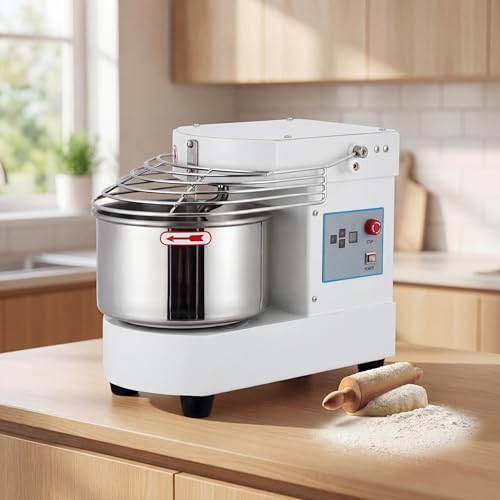
- 10.5Qt bowl handles batches up to 11 lbs
- 650W dual-rotation mixing system
- Touchscreen timer with safety shield
Best For: Small bakeries needing larger batches and digital controls
Compact Home Bakery Pick
OLIXIS 4.2 Qt 10-Speed Tilt-Head Stand Mixer

- 300W motor with 10 speed levels
- Includes dough hook, whisk, flat beater, and splash lid
- Compact 4.2-quart bowl for smaller batches
Best For: Small-batch baking and compact bakery prep
Heavy-Duty Bakery Workhorse
15Qt Commercial Food Mixer, 660W, 3 Speeds

- 15Qt bowl handles larger bakery batches
- 660W motor with three speed settings
- 304 stainless steel food-contact parts
Best For: Bakeries and pizzerias needing larger-batch mixing
Commercial Batch Mixer Value Pick
15QT 600W Commercial Stand Dough Mixer
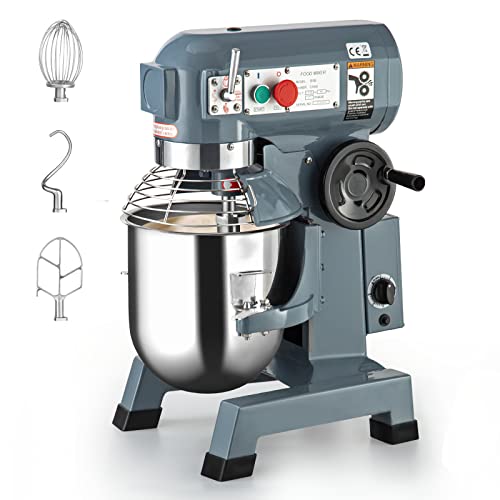
- 15QT bowl handles up to 3.5 lbs of dough
- 600W gear-driven motor with 3 speeds
- Comes with dough hook, whisk, and beater
Best For: Small commercial kitchens needing dependable batch mixing
Commercial all-rounder – VEVOR 15Qt Commercial Mixer – 550W Bowl-Lift Stand Mixer
If you need a dough mixer for small bakery business use, this VEVOR 15Qt commercial mixer is built for batch work with a 550W motor, gear-driven transmission, and three speeds. It is designed to handle dough, fillings, and whipped mixtures, with food-grade stainless steel parts that are easy to clean and hold up well in daily commercial use.
Best For: Small bakeries, pizzerias, and commercial kitchens that want a versatile floor-standing mixer for dough and prep tasks.
Pros:
- 15Qt bowl with up to 2 kg / 3.3 lbs of food per batch
- 3 speeds cover kneading, mixing fillings, and whipping
- Timer knob runs from 0 to 30 minutes and stops automatically
- Includes dough hook, flat beater, and wire whisk
Cons:
- Large floor-standing footprint may be too big for tight counters
- Changing speeds requires stopping the machine first
This is a practical all-rounder if you need one machine for dough plus other bakery prep. The stainless-steel build and simple timer make it easier to fit into a busy production routine.
Dedicated dough kneader – BOOROS Dual-Rotate Dough Mixer – 750W 10.5Qt Kneading Machine
For a dough mixer for small bakery business production, this BOOROS unit focuses on kneading performance. Its 750W motor, dual-rotation design, and 10.5Qt capacity are aimed at fast dough development, while the safety shield and automatic shutoff add protection during regular shop use.
Best For: Small bakeries and pizzerias that want a dedicated dough kneader for recurring batch production.
Pros:
- 750W motor is built for efficient, high-output kneading
- Dual rotation helps mix and knead dough more deeply
- Handles 2.2-11 lbs of flour for small-batch bakery work
- Safety shield shuts the machine off when not closed
Cons:
- Single-purpose design is less versatile than mixers with multiple attachments
- 10.5Qt capacity may be limiting for larger production runs
If your main need is reliable dough work rather than general mixing, this model stays focused on that job. It is especially appealing where speed, consistency, and operator safety matter.
Compact proofing helper – AIZIYO DoughChief – 7.4QT Dough Maker with Ferment Mode
This compact dough mixer for small bakery business owners leans more toward proofing and controlled mixing than heavy-duty production. The AIZIYO DoughChief includes mix, ferment, and mix-and-ferment modes, plus a 77-100°F ferment function that supports dough rising in a compact countertop format.
Best For: Small home-based bake shops or very light bakery prep that needs mixing and proofing in one compact machine.
Pros:
- Built-in ferment mode maintains 77-100°F for proofing
- Mix-pause-mix program is designed to mimic hand kneading
- 7.4QT 304 stainless steel bowl is easy to clean
- Compact, low-noise design suits smaller spaces
Cons:
- 250W motor and 1-speed design are not meant for heavy commercial loads
- Listed as designed for home bakers, not higher-volume bakery use
For small-scale dough prep, this model offers useful fermentation control in a simple package. It is best viewed as a compact specialty dough maker rather than a workhorse for daily bakery volume.
Timer-controlled commercial mixer – VEVOR 15Qt Commercial Mixer – 500W Timer Stand Mixer
If you are shopping for a dough mixer for small bakery business use, this VEVOR commercial mixer offers a practical balance of capacity and control. It pairs a 500W motor with three speeds, a 15Qt bowl, and a 30-minute timer, making it suitable for dough plus other bakery prep in restaurants, pizzerias, and bakeries.
Best For: Small bakeries that want a straightforward commercial mixer with timer control and multiple speed options.
Pros:
- 15Qt stainless bowl suits bakery batches and mixed prep tasks
- 3 speeds include a low setting for kneading dough
- 30-minute timer helps reduce monitoring during mixing
- Includes dough hook, flat beater, and wire whip
Cons:
- 500W motor is less powerful than some higher-output alternatives
- Speed changes require the machine to be stopped first
This model makes sense if you want a reliable commercial mixer without moving up to a larger specialty dough system. It covers the core bakery tasks while staying simple to operate and clean.
Countertop Proofing Helper – Dough Mixer with Fermentation Function
If you need a dough mixer for small bakery business tasks with a smaller footprint, this 5.3-quart dough maker is built for everyday mixing, kneading, and proofing. Its 250W motor handles a range of doughs, while the automatic fermentation function helps streamline bread and pizza prep in a busy kitchen.
Best For: Small bakeries that want an all-in-one dough mixer with built-in fermentation for bread, pizza, and sourdough batches.
Pros:
- 5.3-quart bowl handles 300g to 1600g of flour, with up to 3 loaves of bread at once.
- Automatic fermentation runs at 77-100°F after kneading for consistent proofing.
- 250W motor is designed for reliable mixing of bread, pizza dough, dumpling wrappers, cookies, and more.
- Low-noise base pad and clear lid with top window make it easier to work around.
Cons:
- Best fermentation results are listed for up to 1300g of flour, below the full bowl range.
- Smaller capacity than commercial floor mixers for larger batch production.
- 110V power may limit use depending on your setup.
This is a practical pick if you want convenience and proofing support in one countertop machine. It fits well for smaller-volume production, but the batch limits make it better for compact bakery workflows than high-output operations.
Commercial Workhorse Pick – VEVOR Commercial Mixer 10Qt
This dough mixer for small bakery business use is aimed at shops that want a true commercial stand mixer with a larger bowl and multiple attachments. The 10-quart stainless steel bowl, 450W motor, and gear-driven system are suited to dough, fillings, batters, and whipping tasks in a bakery or pizzeria.
Best For: Small bakeries, pizzerias, and commercial kitchens that need a versatile mixer for heavier dough and mixed prep tasks.
Pros:
- 10-quart stainless steel bowl supports up to 1 kg / 2.2 lbs of food per mix.
- Includes dough hook, flat beater, and wire whip for different bakery tasks.
- 450W motor with 3 speeds gives kneading, mixing, and whipping options.
- Timer knob up to 30 minutes helps reduce constant monitoring.
Cons:
- Very heavy at 123.5 pounds, so it is not portable.
- Large footprint may be difficult in tighter kitchen spaces.
- 110V operation and knob controls are less modern than touchscreen units.
For a small bakery that needs more of a commercial workhorse than a countertop helper, this mixer offers the most traditional heavy-duty setup in the group. It is especially useful if you want one machine for dough, batters, and whipping tasks.
High-Capacity Commercial Choice – 10.5 Qt Commercial Food Mixer
For a dough mixer for small bakery business use where batch size matters, this 10.5-quart commercial unit is built for larger dough loads and repeatable mixing. Its dual-rotation system, touchscreen timer, and stainless steel bowl are aimed at bakeries and restaurants that want a more advanced commercial workflow.
Best For: Small bakeries and food-service kitchens that need higher capacity and digital controls for consistent dough mixing.
Pros:
- 10.5-quart stainless steel bowl handles dough batches up to 11 lbs.
- 650W copper motor and dual-motion mixing support consistent performance.
- Touchscreen control panel makes timer and mixing adjustments more precise.
- Safety shield with interlock protection helps pause operation when opened.
Cons:
- Large commercial size may be more machine than very small kitchens need.
- 114.6-pound weight makes repositioning difficult.
- Single-purpose focus is less flexible than mixers that include multiple attachments.
This model stands out if your bakery wants more capacity and a more modern control setup than a basic countertop mixer. It is a strong fit for shops that regularly prepare larger dough batches and want digital timing control.
Compact Home Bakery Pick – OLIXIS 4.2 Qt 10-Speed Tilt-Head Stand Mixer
If you need a dough mixer for small bakery business tasks that also handles everyday prep, the OLIXIS 4.2 Qt stand mixer is a practical compact option. Its 300W motor, 10 speeds, and included dough hook make it suitable for bread dough, cookies, cake batter, and other smaller-batch mixing jobs where counter space matters.
Best For: Small-batch baking, countertop prep, and bakeries that want a compact all-purpose mixer.
Pros:
- 10 speed settings help handle everything from stiff dough to runny batter.
- Includes dough hook, whisk, flat beater, and splash lid for immediate use.
- Compact 4.2-quart bowl and tilt-head design suit tighter workspaces.
- Easy-clean materials and anti-skid design add everyday convenience.
Cons:
- 4.2-quart capacity is better for small batches than heavy commercial output.
- 300W motor is modest compared with full commercial mixers.
- Best suited to home baking or light bakery use, not high-volume production.
Overall, this mixer makes sense when you want a versatile, space-saving machine for smaller bakery runs. It covers the basics well and gives you the core attachments needed for mixed baking tasks without taking over the prep area.
Heavy-Duty Bakery Workhorse – 15Qt Commercial Food Mixer, 660W, 3 Speeds
For a dough mixer for small bakery business operations that need true batch capacity, this 15Qt commercial stand mixer is built for larger-volume mixing. With a 660W motor, three speed settings, a stainless steel bowl, and attachments made for dough, cream, and light mixtures, it is aimed at bakeries, pizzerias, and other food-service settings.
Best For: Bakeries and pizza shops that need a large-capacity commercial mixer for heavier daily use.
Pros:
- 15-gallon bowl supports larger batches and can mix about 3.5 pounds of dough per run.
- 660W motor and three speed settings give controlled power for different ingredients.
- 304 stainless steel food-contact parts are built for durability and easy cleaning.
- Includes dough hook, flat-bottom mixer, and metal stirring rod for varied tasks.
Cons:
- Very large footprint and 138.9-pound weight make it a permanent workstation machine.
- Only three speeds, so it is less flexible than mixers with more fine-tuned control.
- More machine than many very small bakeries need for occasional use.
This is the strongest choice here if your priority is capacity and commercial durability. It is best treated as a dedicated production mixer rather than a countertop all-rounder.
Commercial Batch Mixer Value Pick – 15QT 600W Commercial Stand Dough Mixer
If you want a dough mixer for small bakery business use with a more straightforward commercial setup, this 15QT model offers the core features most shops need. It combines a 600W motor, three speeds, a stainless steel bowl, and the standard dough hook, whisk, and beater attachments for pizza dough, batters, and whipping jobs.
Best For: Small commercial kitchens that want a durable 15-quart mixer for everyday batch work.
Pros:
- 15QT bowl can mix up to 3.5 lbs of dough at once.
- 600W gear-driven motor is designed for reliable commercial use.
- Three included attachments cover heavy dough, batters, and light whipping.
- Safety guard and adjustable bowl height add practical shop-friendly features.
Cons:
- Only three speeds, so it is less versatile than higher-speed machines.
- 108-pound weight makes it a fixed-location mixer.
- Best suited to steady batch production, not quick countertop jobs.
This mixer lands in a useful middle ground for small bakery operations that need commercial capacity without unnecessary complexity. It focuses on the essentials and should fit well in spaces where reliability and batch size matter more than extra features.
How We Picked the Best Dough Mixer for Small Bakery Business
For a Dough Mixer for Small Bakery Business use, we prioritized capacity, motor power, speed control, bowl material, safety features, and whether the machine can handle repeated daily mixing without feeling underbuilt. We also looked for mixers that suit common bakery tasks such as pizza dough, sandwich loaves, enriched doughs, and sourdough.
Quick Comparison
In general, 4 to 7 quart mixers fit light production and test batches, 10 to 15 quart units work better for steady small-shop output, and larger commercial models are best when you need frequent, heavier-duty mixing. Dual-rotation and higher-wattage machines tend to knead dough more thoroughly, while lower-capacity tilt-head mixers are usually better for occasional baking rather than production use.
Key Buying Factors for a Dough Mixer for Small Bakery Business
Capacity
Match bowl size to your typical batch, not your largest one. Buying too small creates bottlenecks; buying too large can reduce mixing efficiency on modest batches.
Motor Power and Gear Design
Dense dough needs enough torque to knead without strain. Higher wattage helps, but the gearbox and mixing action matter just as much as raw power.
Speed Control
Multiple speeds help you start dry ingredients gently, develop dough properly, and avoid overworking delicate mixes. A clear low-speed setting is especially useful for bakery dough.
Build Quality and Bowl Material
Stainless steel bowls, sturdy hooks, and commercial-style housings are easier to clean and generally more suitable for busy environments.
Safety and Workflow Features
Timer functions, shields, lid designs, and stable bases improve consistency and reduce interruptions during service hours.
Who Should Buy Which Dough Mixer for Small Bakery Business?
If you bake in smaller daily volumes or need one machine for multiple prep tasks, a 4 to 7 quart mixer is often the most flexible choice. If you run a growing bakery, cafe, or pizza-focused shop, a 10 to 15 quart commercial model is usually the better fit. If your operation depends on frequent dough production, choose the most robust motor and largest practical capacity your counter space and electrical setup can support.
For a small bakery, the best dough mixer is the one that matches your real batch size, handles your toughest dough confidently, and stays efficient during repeated use.