The best utility carts for restaurants help staff move ingredients, dishes, cookware, cleaning supplies, and small equipment without unnecessary trips. The right model can also improve organization in busy kitchens, dining rooms, storage areas, and service corridors.
This roundup compares 10 commercial-style carts by capacity, construction, shelf design, maneuverability, and maintenance needs so you can choose a practical fit for your operation.
Best 10 Utility Carts for Restaurants Picks for 2026
Heavy-Duty Metal Pick
990-Lb 3-Tier Rolling Utility Cart
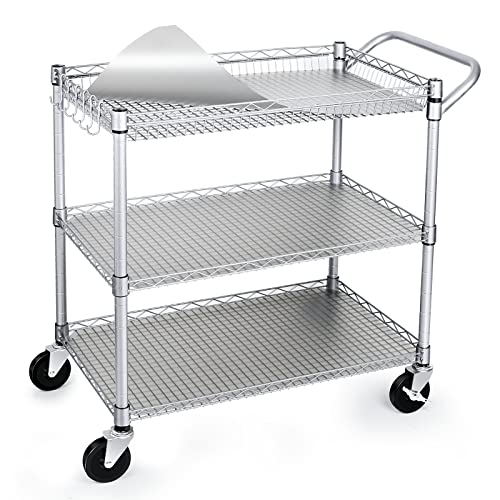
- 990-lb maximum capacity on wheels
- Adjustable shelves with liners and hooks
- Silent casters with two locking wheels
Best For: Moving heavy supplies and appliances in commercial kitchens
Easy-Care Plastic Pick

- 500-lb maximum capacity
- Rust-, stain-, scratch-, and dent-resistant polypropylene
- Deep trays with built-in tool storage
Best For: Routine service and transport in easy-clean work areas
NSF-Certified Commercial Pick
45-Inch 3-Tier NSF Rolling Cart

- NSF-certified carbon steel construction
- 1,000-lb static caster capacity; 550-lb dynamic
- Includes liners, hooks, and adjustable shelves
Best For: Large commercial kitchens and heated or dry storage
Lightweight Organization Pick
TUFFIOM 3-Tier Plastic Service Cart

- 390-lb maximum capacity
- Three open shelves for organized access
- Four swivel casters with two brakes
Best For: Lighter-duty indoor restaurant and foodservice organization
Heavy-Duty Workhorse
NTE 3-Tier Rolling Utility Cart

- 990-pound stated total capacity
- Adjustable/removable shelves with liners
- Locking casters and six utility hooks
Best For: Heavy restaurant loads and flexible commercial-kitchen transport
Large Lightweight Service Cart

- Large three-tier tray design
- Quiet lockable wheels
- Rust-resistant aluminum frame and easy-clean trays
Best For: Everyday indoor foodservice transport and cleanup-friendly use
Organized Metal Carrier
Heavy Duty 3-Tier Utility Cart

- 990-pound stated capacity
- Adjustable wire shelves and ventilated basket
- Includes liners, hooks, and locking casters
Best For: Heavy-duty restaurant transport with built-in organization
Best Overall
WORKPRO 3-Tier Service Utility Cart

- 400-pound total capacity with 134 pounds per tier
- Three washable PP trays with raised edges
- Locking casters and tool-free assembly
Best For: Flexible restaurant storage and indoor service transport
Best Heavy-Duty Pick
680Lbs 2-Tier Metal Rolling Cart

- 680-pound maximum capacity
- Adjustable shelves with liners and six hooks
- Silent casters with two locking wheels
Best For: Heavy restaurant supplies and commercial transport
Best Lightweight 3-Tier Option

- Three shelves with 24-by-15-inch trays
- Lightweight 16.8-pound design
- Scratch-, dent-, chip-, and rust-resistant materials
Best For: Everyday restaurant service and lightweight supply transport
Heavy-Duty Metal Pick – 990-Lb 3-Tier Rolling Utility Cart
For restaurants needing high-capacity utility carts, this three-tier metal model combines adjustable shelving with a 990-pound maximum capacity. Its gray, chrome-plated surface is designed for regular kitchen and service-area use, while the handle and locking casters support controlled movement.
Best For: Restaurants and commercial kitchens moving heavy supplies, appliances, or service items.
Pros:
- Supports up to 990 pounds on wheels.
- Three shelves adjust in 1-inch increments and include shelf liners.
- Four silent casters include two locking wheels.
- Includes a push handle, ventilated basket, and six hooks.
Cons:
- The metal construction weighs 26 pounds and may be more cart than lighter-duty tasks require.
- Its 35.63-inch depth may need substantial aisle or storage space.
This is a strong choice among utility carts for restaurants when load capacity and flexible organization matter most. The adjustable shelves and accessories add practical versatility, while the locking wheels help stabilize the cart during loading and unloading.
Easy-Care Plastic Pick – MaxWorks 2-Shelf Service Cart
This MaxWorks cart offers a practical option for restaurants that want utility carts for restaurants with deep trays and low-maintenance construction. Its polypropylene body resists rust, stains, scratches, and dents, making it suited to busy work areas where easy cleanup is important.
Best For: Restaurants, workshops, and back-of-house areas needing a durable two-shelf service cart.
Pros:
- Supports up to 500 pounds.
- Polypropylene construction will not rust or dent easily.
- Deep trays help contain items during transport.
- Includes 5-inch non-marring casters and built-in tool storage.
Cons:
- It has only two shelves, providing less tiered storage than three-shelf models.
- The listed caster configuration has three wheels, which may feel less conventional for some users.
- The manufacturer warranty is 90 days.
Choose this cart when easy cleaning and resistance to common wear are higher priorities than maximum capacity or extra shelving. Its 500-pound rating and deep trays make it a useful general-purpose service cart for restaurant and utility tasks.
NSF-Certified Commercial Pick – 45-Inch 3-Tier NSF Rolling Cart
For foodservice buyers comparing utility carts for restaurants, this NSF-certified carbon steel cart is designed for dry and heated storage environments. It offers adjustable wire shelves, multiple setup options, and a stated 550-pound dynamic capacity when used with casters.
Best For: Commercial kitchens and dining operations that need a large, NSF-certified storage and transport cart.
Pros:
- NSF-certified for dry and heated storage environments.
- Three wire shelves adjust in 1-inch increments.
- Includes 20 hanging hooks and three PP shelf liners rated for 176–212°F.
- Can be assembled with casters for mobility or leveling feet for stability.
Cons:
- The 45-inch depth and 25-inch width require considerable space.
- Dynamic capacity with casters is 550 pounds, lower than its 1,000-pound static caster rating.
- At 44.1 pounds, it is relatively heavy to reposition without assistance.
This model stands out when sanitation-oriented certification, large storage volume, and configurable shelving are central requirements. Buyers should distinguish between its static and dynamic capacity ratings and confirm that the larger footprint fits their kitchen layout.
Lightweight Organization Pick – TUFFIOM 3-Tier Plastic Service Cart
This TUFFIOM model is a practical choice for restaurants seeking utility carts for restaurants with open, easy-access storage and a lighter 390-pound capacity. Its plastic-and-aluminum construction, rounded corners, side handles, and locking swivel casters support everyday indoor organization and transport.
Best For: Restaurant, hotel, and foodservice areas organizing lighter supplies across three open shelves.
Pros:
- Three shelves provide separated storage for frequently used items and supplies.
- Four swivel casters include two brakes.
- Two ergonomic side handles support control while moving.
- Rounded corners help reduce contact with walls and furniture.
Cons:
- Its 390-pound capacity is lower than the metal commercial carts in this roundup.
- The plastic frame may be less suitable for very heavy loads or demanding industrial use.
- The 41-inch width may be restrictive in narrow aisles.
This cart makes sense for lighter-duty restaurant organization where open visibility and maneuverability matter. Its three shelves and side handles are useful for routine supply movement, but high-load operations should consider a higher-capacity metal alternative.
Heavy-Duty Workhorse – NTE 3-Tier Rolling Utility Cart
For restaurants that need to move heavy supplies, equipment, or prepared food, this 3-tier metal cart offers a notably high stated capacity. Its adjustable shelves, liners, hooks, and lockable casters make it a flexible choice among utility carts for restaurants.
Best For: Restaurants and commercial kitchens transporting bulky or heavy loads between work areas.
Pros:
- Stated 990-pound total weight capacity with industrial-grade metal construction.
- Adjustable or removable shelves accommodate different item sizes.
- Includes shelf liners, six S-hooks, silent casters, and two locking wheels.
- Electroplated surface is described as rust-resistant, waterproof, and easy to clean.
Cons:
- At 35.3 inches deep with the handle, it requires substantial storage or aisle space.
- The metal construction weighs 25.1 pounds before loading.
This is the strongest fit when load capacity and adaptability matter most. The included liners and hooks add practical kitchen utility, while the larger footprint may be less suitable for tight restaurant layouts.
Large Lightweight Service Cart – Plastic Commercial Cart
This large plastic service cart is a practical option for restaurants that want broad tray space and quieter movement. Its three non-slip tiers, aluminum frame, and lockable wheels suit everyday foodservice and back-of-house transport.
Best For: Foodservice teams needing a large, easy-clean cart for indoor restaurant, office, or warehouse use.
Pros:
- Large 40.15-by-19.29-by-38.97-inch overall dimensions provide generous working space.
- High-density plastic trays are non-slip and easy to clean.
- Lockable, silent swivel wheels support quiet movement and secure parking.
- Aluminum legs resist rust while keeping the cart relatively light and durable.
Cons:
- Its supplied capacity information varies between a 550-pound load claim and a 500-pound specification.
- Plastic trays may be less suited to extremely heavy-duty use than a full-metal cart.
- The tall, wide design may be difficult to maneuver in narrow aisles.
Choose this model when easy cleaning, quiet rolling, and large tray dimensions are more important than maximum metal-cart durability. Confirm the applicable weight rating before carrying especially heavy restaurant equipment.
Organized Metal Carrier – Heavy Duty 3-Tier Utility Cart
This commercial-grade metal cart combines a high stated capacity with storage-focused features for restaurant transport tasks. Wire shelving, a ventilated basket, adjustable shelf positions, liners, hooks, and a push bar make it one of the more versatile utility carts for restaurants.
Best For: Restaurant kitchens, warehouses, and service areas that need organized transport for heavy or bulky supplies.
Pros:
- Stated 990-pound capacity, thick wire shelving, and one-inch support poles.
- Four-inch silent industrial casters include two locking wheels.
- Adjustable shelves, a ventilated basket, three liners, and six hooks improve organization.
- Chrome-plated metal is described as resistant to rust and oxidation.
Cons:
- At 35.6 inches deep, it has a relatively large footprint for compact kitchens.
- Wire shelves may need the included liners for small items or spill-prone loads.
- The supplied dimensions and capacity emphasize heavy-duty use, so narrow aisles may limit maneuverability.
This cart is a strong middle ground for teams that need both high load capacity and organized storage. Its basket and accessories are particularly useful for separating smaller utensils or supplies from larger loads.
Best Overall – WORKPRO 3-Tier Service Utility Cart
For restaurants needing flexible storage and easy cleanup, the WORKPRO 3-Tier Service Utility Cart is a practical pick among utility carts for restaurants. Its polypropylene trays, aluminum frame, raised edges, and 400-pound total capacity suit food service, kitchen, and general indoor transport.
Best For: Restaurant staff who need spacious, open-access storage with a lightweight, maneuverable design.
Pros:
- Three tiers provide ample storage, with 134 pounds of capacity per shelf.
- Two swivel casters lock, while all four wheels rotate 360 degrees for maneuverability.
- Raised tray edges help keep items from sliding off during transport.
- Assembly requires only a rubber mallet and no other tools.
Cons:
- The cart is intended for indoor use.
- Its open shelving offers less protection from dust or spills than enclosed storage.
This WORKPRO model balances capacity, mobility, and simple maintenance. It is especially useful for moving supplies, dishes, or equipment between restaurant work areas.
Best Heavy-Duty Pick – 680Lbs 2-Tier Metal Rolling Cart
When load capacity is the priority, this commercial-grade metal cart stands out among utility carts for restaurants. Its anti-rust chrome-plated surface, adjustable shelving, liners, hooks, and 680-pound capacity make it suited to transporting heavier or bulkier supplies.
Best For: Busy restaurant, kitchen, warehouse, or bar areas that need a high-capacity metal transport cart.
Pros:
- Supports up to 680 pounds on its four wheels.
- Two shelves adjust in one-inch increments for flexible organization.
- Includes two shelf liners, six hooks, and a ventilated basket design.
- Four silent casters provide smooth movement, with two locking wheels for stability.
Cons:
- Only two shelves are included, providing less tiered storage than three-shelf carts.
- The metal construction weighs about 28.7 pounds, making it heavier to reposition than lighter plastic models.
This cart is a strong choice for demanding transport tasks where a high weight rating matters more than maximum shelf count. Its adjustable layout also helps accommodate different supplies and equipment.
Best Lightweight 3-Tier Option – Plastic Restaurant Food Cart
This plastic restaurant food cart offers a useful combination of three-tier storage, easy handling, and a relatively light 16.8-pound build. For restaurants comparing utility carts for restaurants, its polypropylene shelves, aluminum uprights, ergonomic handles, and lockable casters provide practical everyday versatility.
Best For: Restaurant, office, or warehouse users who want lightweight three-level storage for catering equipment, boxes, or tools.
Pros:
- Three shelves provide 24-by-15-inch tray space for supplies and equipment.
- Polypropylene shelves resist scratches, dents, chips, and rust.
- Two ergonomic handles and four swiveling wheels make the cart easy to guide.
- Two wheels lock, and raised tray sides help secure items in transit.
Cons:
- The supplied notes list different capacity figures: 480 pounds in the feature description and 510 pounds in the specifications.
- Disassembly is difficult after installation, so shelf direction must be checked during assembly.
With three shelves and a lighter frame, this cart is convenient for routine service and storage duties. Buyers should verify the applicable weight rating before loading especially heavy items.
How We Picked the Best Utility Carts for Restaurants
We focused on the features that matter in daily foodservice work: load capacity, shelf layout, cart dimensions, wheel quality, handle design, cleanability, and overall durability. The selection includes metal carts for demanding loads, polypropylene models that resist moisture and corrosion, and three-tier designs that maximize vertical storage.
We also considered practical details such as non-marring casters, locking wheels, deep trays, NSF-related commercial positioning, and whether a cart is better suited to transport, staging, storage, or cleanup. Always confirm the manufacturer’s specifications and certifications before using a cart in a regulated food-preparation environment.
Quick Comparison
| Cart type | Best for | Main advantage | Potential trade-off |
|---|---|---|---|
| Heavy-duty metal | Large loads and equipment | High capacity and rigid construction | Heavier and more prone to visible scratches or corrosion if poorly maintained |
| Plastic or polypropylene | Food, cleaning, and general service | Easy to clean and resistant to moisture | May flex more under uneven or concentrated loads |
| Two-tier cart | Bulky items and open transport | More vertical clearance | Less organized storage than a three-tier design |
| Three-tier cart | Staging and small-item organization | More usable shelf space | Each shelf may have a lower individual weight limit |
Key Buying Factors for Utility Carts for Restaurants
Capacity and Load Distribution
Choose a cart with enough total capacity for your heaviest routine load, not just its average use. Check shelf-specific limits and distribute weight evenly to improve stability and reduce strain on the casters.
Materials and Cleaning
Metal is a strong choice for cookware, small appliances, and bulk supplies. Plastic is often more convenient around spills, wet floors, food ingredients, and cleaning chemicals. Look for smooth surfaces, rounded corners, and shelves that are easy to wipe down.
Wheels, Brakes, and Maneuverability
Large, non-marring casters generally roll more smoothly over thresholds and uneven flooring. Locking wheels help when loading, unloading, or positioning a cart beside a prep station. Confirm that the cart fits through doorways and around your tightest turns.
Size and Shelf Configuration
Measure storage locations, aisles, elevators, and service counters before ordering. Deep trays can help contain bottles and dishes, while open shelves are better for bulky items. A handle at a comfortable height also makes frequent pushing safer and easier.
Who Should Buy Which Utility Carts for Restaurants?
Choose a heavy-duty metal cart when your restaurant regularly moves dense loads, cookware, beverage supplies, or equipment. A two-tier metal model is useful when items are bulky or need generous vertical clearance.
Select a plastic or polypropylene cart for wet environments, cleaning duties, food staging, and everyday service. Three-tier versions are especially practical when staff need to separate supplies or keep smaller items organized. If floors are easily marked, prioritize non-marring casters; if carts remain parked during loading, prioritize reliable wheel locks.
For any of these Utility Carts for Restaurants, match the cart to the route, load, cleaning routine, and available storage space. A slightly smaller cart that staff can maneuver safely is usually more useful than an oversized model that blocks aisles or exceeds the workspace.