Making oil at home can give you more control over ingredients, freshness, and pressing temperature. The right machine depends on the seeds or nuts you use, your expected output, and how much hands-on work you want.
We compared 10 oil presses across capacity, heating control, construction, cleaning convenience, and suitability for household or commercial use to help you choose with confidence.
Best 10 Oil Presses Picks for 2026
High-Capacity Electric Pick

- Up to 11 lbs of flaxseed per hour
- 122°F–572°F adjustable temperature
- Presses over 30 ingredient types
Best For: Frequent home, restaurant, or small commercial use
Portable Manual Pick
Original Nut and Seed Oil Expeller
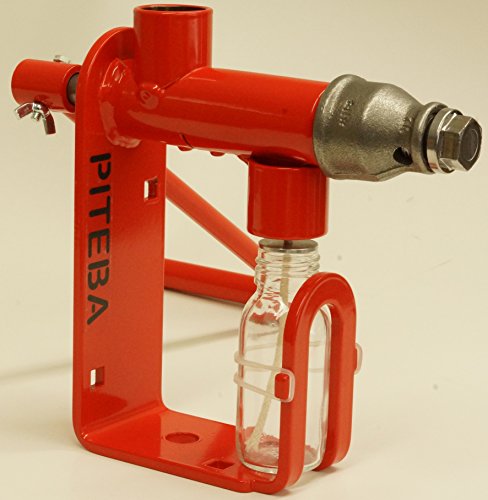
- No external power source required
- Designed for continuous expelling
- Compact 4.14-pound design
Best For: Small farms and manual, small-scale pressing
Commercial-Style Heating Pick
Automatic Stainless Steel Oil Press

- 4–5 kg hopper capacity
- Hot and cold pressing modes
- Includes filter, funnel, cup, and brush
Best For: Repeated home or commercial batches
Easy-Clean Home Pick

- Detachable, easy-to-clean design
- Hot and cold pressing with digital controls
- Supports over 30 seed and nut types
Best For: Home kitchens needing convenient automatic operation
Best Overall Electric Pick
Adjustable Hot & Cold Oil Press

- 304 stainless-steel construction
- Cold and hot pressing modes
- Digital temperature control
Best For: Home users pressing varied nuts and seeds
Best Manual Option
CGOLDENWALL Household Seed Oil Press

- Manual physical pressing
- Portable stainless-steel design
- One-year warranty included
Best For: Occasional household pressing of oil-rich crops
Best High-Capacity Choice

- Up to 9–13.5 pounds per hour
- Hot and cold pressing modes
- Temperature display and included accessories
Best For: High-volume home or small commercial batches
Best Dual-Outlet Oil Press

- Two independent 1500W motors
- Double outlets for simultaneous pressing
- Automatic controls with low-noise operation
Best For: Higher-volume home or commercial pressing
Best Temperature-Controlled Oil Press
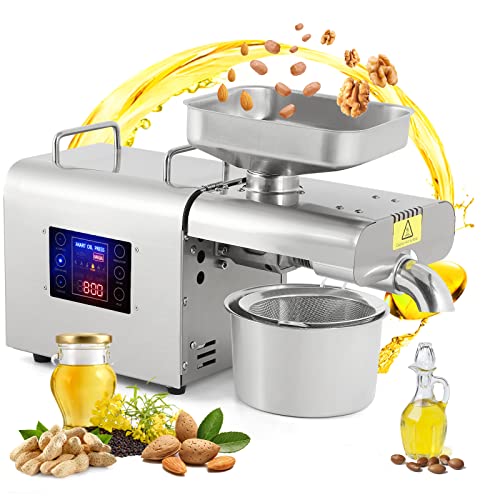
- Cold and hot pressing modes
- Six temperature settings from 140°F to 240°F
- LCD touchscreen shows operating details
Best For: Controlled pressing of varied seeds and nuts
Best Versatile Oil Press
CGOLDENWALL 1000W Cold & Hot Press

- 32–572°F intelligent temperature control
- Cold and hot pressing modes
- Includes pots, filter, tools, and accessories
Best For: Experimenting with many oil-bearing seeds and nuts
High-Capacity Electric Pick – VEVOR 11 LBS/H Oil Press
If you want oil presses for frequent home, restaurant, or small commercial use, this VEVOR model stands out for its stated capacity of up to 11 pounds of flaxseed per hour. Its broad temperature range and compatibility with more than 30 ingredients make it a flexible option for experimenting with fresh oils.
Best For: Users who want a high-capacity electric oil press with adjustable hot- and cold-press settings.
Pros:
- Advertised pressing capacity of up to 11 pounds of flaxseed per hour.
- Adjustable temperature range from 122°F to 572°F for hot or cold pressing.
- Supports more than 30 nuts, seeds, and other oil-rich ingredients.
- Includes an oil cup, filter screen, gloves, and cleaning brush.
Cons:
- Its 28.7-pound weight makes it less convenient to move frequently.
- Requires hand washing and uses a 220-volt power supply.
- The listed dimensions include an unusual 100-inch height, so verify the actual footprint before ordering.
Choose this model when throughput and ingredient flexibility matter more than portability. The stainless steel core components and included accessories add practicality, but its electrical requirements and size deserve attention.
Portable Manual Pick – Original Nut and Seed Oil Expeller
Among oil presses, this manually operated expeller is the straightforward choice for buyers who do not want an electric appliance. It is designed for continuous expelling, needs no external power source, and has a compact form that suits small-scale pressing.
Best For: Small farms, homesteaders, and users who prefer a compact manual tool.
Pros:
- Operates manually without an external power source.
- Designed for continuous expelling with almost no maintenance required.
- Compact dimensions and a listed weight of 4.14 pounds.
- Suitable as a small-scale addition to a healthy lifestyle or farm setup.
Cons:
- Manual operation requires more physical effort than an electric press.
- The supplied notes do not specify pressing capacity or supported ingredients.
- It lacks the automated temperature and accessory features described for the electric models.
This expeller makes sense if simplicity, portability, and independence from electrical power are your priorities. Buyers seeking high output or detailed operating controls will likely prefer an automatic machine.
Commercial-Style Heating Pick – Automatic Stainless Steel Oil Press
This automatic stainless steel model is one of the more commercial-oriented oil presses in the lineup, with a large hopper, a brushless motor, and a dual-temperature heating system. It supports both hot and cold pressing, making it suitable for users who want to adjust the process for different nuts and seeds.
Best For: Home or commercial users who want automatic pressing with dedicated heating controls.
Pros:
- 38 mm hopper reportedly holds 4–5 kg at a time.
- Pure copper heat pipe is designed for fast, even heat conduction.
- Offers hot- and cold-pressing modes for different extraction preferences.
- Includes a cleaning brush, filter, funnel, glove, manual, oil cup, and power cord.
Cons:
- The supplied details list button-based heating targets of 200°C and 240°C rather than a continuously adjustable range.
- At 610 watts, it has less listed power than some higher-wattage alternatives.
- Hand washing is required.
Its larger feed capacity and included accessories give it a practical edge for repeated batches. Consider it if you want automated operation and hot/cold flexibility, but review the heating controls and operating instructions before use.
Easy-Clean Home Pick – JOYKUVA 850W Oil Press
For shoppers comparing oil presses for a home kitchen, the JOYKUVA 850W machine emphasizes detachable cleaning, automatic controls, and ingredient flexibility. It supports hot and cold pressing, includes a reverse function for clearing residue, and is specified for 110V use.
Best For: Home users who value easy cleanup, automatic operation, and support for many dry seeds and nuts.
Pros:
- Detachable design is intended to simplify cleaning.
- Supports hot and cold pressing with smart temperature control.
- Advertised compatibility with more than 30 types of seeds and nuts.
- Includes automatic stop protection, a reverse motor function, and a digital display.
Cons:
- Requires dried ingredients, cutting raw materials into small pieces, and 10 minutes of preheating.
- The supplied instructions exclude several ingredients, including green olives, avocados, walnuts, coffee beans, spices, and flowers.
- Manual cleaning of the pressing rod and chamber is still recommended after each use.
This is a practical fit for countertop users who want a feature-rich electric press rather than a manual tool. Its ingredient restrictions and preparation steps are important, especially for buyers interested in olive or unusual botanical oils.
Best Overall Electric Pick – Adjustable Hot & Cold Oil Press
For shoppers comparing oil presses, this electric model offers a useful balance of output, temperature control, and cleanup convenience. Its 150W copper motor is rated to process 6.61–13.22 pounds of raw material per hour, while the digital controls support both cold and hot pressing.
Best For: Home users who want adjustable temperature control and versatile pressing for nuts and seeds.
Pros:
- 304 stainless-steel construction is designed for repeated use.
- Cold and hot modes accommodate different ingredients and pressing preferences.
- Digital temperature display, preset controls, and thermostatic regulation simplify operation.
- Detachable parts and smooth surfaces support easier hand cleaning.
Cons:
- Hand-wash-only care may require more cleanup time.
- The supplied information does not indicate compatibility with every type of seed or crop.
This is a practical all-around oil press for cooks who value control and flexibility. The stated output and dual-mode design make it more suitable for regular home batches than a purely manual unit.
Best Manual Option – CGOLDENWALL Household Seed Oil Press
This manual option stands out among oil presses for shoppers who prefer a compact, hands-on setup. It uses physical pressing without chemical ingredients and has a stainless-steel body and handle, but it requires manual operation and continuous heating during use.
Best For: Users seeking a portable manual press for oil-rich crops such as peanuts, sunflower seeds, sesame, walnuts, and coconut.
Pros:
- Manual physical pressing avoids added chemical ingredients.
- 304 stainless-steel body and handle resist rust.
- Portable design weighs about 2.96 kg and has a 1-liter capacity.
- Includes a one-year warranty and English instructions.
Cons:
- Manual operation is less convenient for larger or frequent batches.
- Continuous heating is required during use.
- The manufacturer does not recommend flaxseed, rapeseed, or olives.
Choose this press if simplicity and manual control matter more than automation. Its crop limitations and heating requirement make it a more specialized choice, but the compact stainless-steel construction suits occasional household use.
Best High-Capacity Choice – 820W Automatic Oil Press
Among oil presses, this 820W automatic model is aimed at buyers who need faster, longer-running production. It offers hot and cold modes, a stated capacity of up to 9–13.5 pounds per hour, and an intelligent panel for setting and monitoring temperature.
Best For: Home or small commercial users who need higher throughput for common seeds and nuts.
Pros:
- 820W motor and all-steel gearing support continuous pressing for up to 24 hours.
- Hot and cold modes provide flexibility for output and flavor preferences.
- Temperature settings range from 104–464°F with real-time display.
- Kit includes a filter, cleaning brush, gloves, oil cup, hopper, and other pressing components.
Cons:
- It is not recommended for olives, cocoa beans, spices, flowers, herbs, coffee beans, or similar materials.
- Hand-wash-only care may be demanding after extended pressing.
This is the strongest fit for buyers prioritizing throughput and automation over a small footprint. Its broad stated temperature range and included accessories add convenience, provided your ingredients are within the recommended list.
Best Dual-Outlet Oil Press – 1500W Double-Outlet Oil Press
For buyers comparing oil presses for higher-volume home or commercial use, this 1500W model stands out with two independent motors and double oil outlets. Its automatic controls, stainless-steel construction, and stated continuous-work capability make it suited to processing different materials efficiently.
Best For: Users who want simultaneous or independent pressing with a high-power machine.
Pros:
- Two independent 1500W motors and outlets can operate separately or press different materials at the same time.
- Four-stage gearing is designed for lower wear and up to 24 hours of continuous operation.
- Automatic preheating and pressing controls simplify operation.
- Uses 0.5–0.6 kWh per hour and produces less than 70 dB of noise, according to the listing.
Cons:
- Its 1500W power rating may be more than needed for occasional household use.
- The machine is relatively large at 18.5 by 13.5 by 10 inches.
- The instructions call for an approximately eight-minute preheat before pressing.
This is a practical choice when throughput and flexibility matter most. The dual-motor layout is its key advantage, while the larger footprint and commercial-oriented power level may be less appealing for small kitchens.
Best Temperature-Controlled Oil Press – CGOLDENWALL K28 Oil Press
Among oil presses for users who want control over extraction conditions, the CGOLDENWALL K28 combines cold and hot pressing with a touchscreen interface. Its six temperature levels and LCD status display make it easier to adjust settings for different seeds and nuts.
Best For: Home or commercial users who prioritize adjustable temperatures and clear digital controls.
Pros:
- Supports both cold and hot pressing.
- Six selectable temperature levels from 140°F to 240°F accommodate different materials.
- The 5.25-inch LCD touchscreen displays temperature, heating time, mode, and working status.
- The listing states that it handles more than 24 types of nuts and seeds.
Cons:
- At 13 kg, it is heavier than many portable countertop appliances.
- Hand washing is listed as the care instruction.
- The stated capacity is 1 liter, which may limit larger batches.
The K28 is a strong fit for buyers who want repeatable settings rather than simple one-button pressing. Its touchscreen and temperature selection add versatility, though the weight and smaller listed capacity may matter for frequent bulk processing.
Best Versatile Oil Press – CGOLDENWALL 1000W Cold & Hot Press
This CGOLDENWALL model is one of the more versatile oil presses for experimenting with different seeds, nuts, and oil-bearing ingredients. It combines cold and hot pressing, an adjustable 32–572°F temperature range, automatic temperature monitoring, and a listed pressing speed of up to 10 pounds per hour for peanuts.
Best For: Users who want broad ingredient compatibility and precise temperature adjustment.
Pros:
- Supports both cold and hot pressing, allowing a choice between nutrient retention and higher yield.
- Intelligent temperature control covers a broad 32–572°F range.
- Designed for many materials, including peanuts, sunflower seeds, walnuts, sesame, flax, and pumpkin seeds.
- Includes two pots, a filter, brush, gloves, squeeze, power cable, and tool set.
Cons:
- Raw materials need to be sufficiently dry, and the machine requires preheating.
- The listing recommends oil-bearing materials with more than 15% oil content.
- At 29 pounds, it may be less convenient to move frequently.
With its unusually wide temperature range and broad ingredient list, this is a flexible option for users who plan to press more than one or two familiar seeds. The required preparation and heavier build are trade-offs for its control and included accessories.
How We Picked These Oil Presses
We focused on practical differences that matter after installation: pressing capacity, motor power, temperature range, control options, construction, cleanup, and intended workload. The selection includes automatic electric machines, a manual model, compact household options, and higher-output commercial-style presses.
Because performance varies by ingredient, treat advertised capacity as a guideline rather than a guarantee. Oil yield depends on seed variety, moisture, preparation, temperature, and pressing technique. We also gave weight to features that make regular use easier, such as detachable parts, stainless-steel components, adjustable heat, and continuous-feed designs.
Quick Comparison
| Best For | Look For | Trade-Off |
|---|---|---|
| Occasional home use | Compact automatic controls and simple cleanup | Lower throughput |
| Cold pressing | Precise temperature adjustment and low-heat operation | Slower extraction |
| Frequent family use | Higher wattage, continuous expelling, and sturdy construction | More counter space and maintenance |
| Small commercial workloads | Large feed capacity, durable steel parts, and consistent heating | Higher price and power consumption |
| Maximum control | Manual pressing and adjustable technique | More physical effort |
Key Buying Factors for Oil Presses
Capacity and Workload
Match the machine to how much oil you expect to make in one session. A compact press may be ideal for occasional batches, while a higher-capacity model is more practical for repeated use or larger quantities. Avoid choosing by wattage alone; throughput, hopper size, and continuous operation matter too.
Hot Versus Cold Pressing
Cold pressing generally uses lower temperatures and may better suit buyers prioritizing minimal heat exposure. Hot pressing can improve flow and extraction for some ingredients but may change flavor and requires closer temperature control. Choose a model with a clearly adjustable range if you plan to use both methods.
Temperature and Controls
Digital displays, preset programs, and multiple temperature levels simplify repeatable batches. Manual controls can offer flexibility but require more attention. Confirm that the stated temperature range matches your ingredients and that controls are easy to read while the machine is operating.
Cleaning and Durability
Oil residue can harden quickly, so detachable components and accessible pressing chambers are valuable. Stainless steel is often easier to maintain and more resistant to everyday wear. Check the included tools and cleaning instructions before buying, especially if you expect frequent use.
Who Should Buy Which Oil Presses?
Choose an automatic household press if convenience and occasional fresh oil are your priorities. A model with adjustable hot and cold settings is the most versatile choice for experimenting with different seeds and nuts. Buyers processing larger batches should consider a higher-wattage commercial-style press with continuous operation and robust metal construction.
A manual press makes sense when you want mechanical simplicity, portability, or maximum hands-on control and do not mind slower output. Whichever model you choose, verify voltage, available counter space, ingredient compatibility, warranty coverage, and replacement-part availability before ordering.