Consistent thickness is one of the easiest ways to improve laminated pastry, crackers, flatbreads, and enriched doughs. The right sheeter can reduce repetitive rolling while giving you better control over dough handling.
We selected 10 manual and electric models across home, cottage-bakery, and commercial use. This guide focuses on capacity, adjustment range, cleaning, workspace, and the practical trade-offs that matter when choosing a machine.
Best 10 Dough Sheeters for Artisan Baking Picks for 2026
Best Portable Pick

- 0.2–27 mm thickness adjustment
- Non-stick PE board
- Folds for compact storage
Best For: Home kitchens and small commercial baking spaces
Best Electric Value
22.7-Inch Electric Dough Sheeter
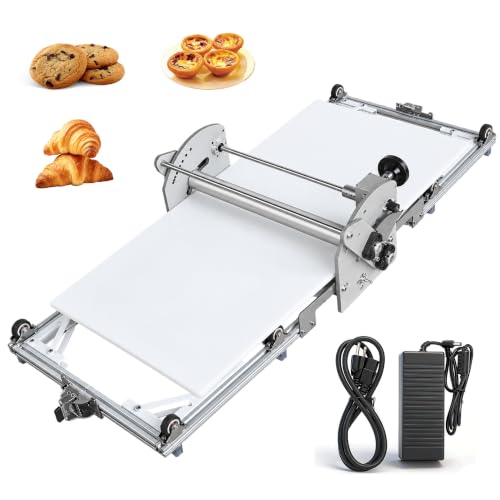
- Electric, consistent rolling
- 2–30 mm adjustment
- Detachable space-saving design
Best For: Home bakers, cafés, and small food businesses
Best Precision Manual

- 55 thickness settings
- Handles up to 1 kg of dough
- Five-year home or commercial warranty
Best For: Laminated pastry and micro-bakery batches
Best Commercial Capacity
48-Inch Electric Dough Sheeter

- Up to 30-pound listed capacity
- 2–30 mm adjustment
- Large 39.3 x 17.7-inch PE board
Best For: Professional bakeries and high-volume pastry production
Compact Artisan Pick
Foldable 12-Inch Dough Sheeter

- Folds for compact countertop storage
- Includes two food-grade PE boards
- 0.2–17.5 mm thickness adjustment
Best For: Home bakers with limited kitchen space
Wide-Batch Choice
15.5-Inch Manual Dough Sheeter

- Extra-wide board for larger batches
- Stainless steel rollers and frame
- Low-friction hand-crank operation
Best For: Small bakeries and high-volume home baking
Versatile Thickness Pick
Foldable Stainless Steel Dough Sheeter

- Adjusts from 2–30 mm
- 304 stainless steel construction
- Foldable hand-crank design
Best For: Home bakers making varied pastries and pizza
Best Manual Countertop Sheeter

- Electricity-free manual operation
- 0–12 mm adjustable thickness
- Removable parts for cleaning and storage
Best For: Home and small commercial kitchens
Best Foldable Bakery Sheeter
Folding Stainless Steel Dough Sheeter

- Folds for space-saving storage
- 2–25 mm thickness adjustment
- Stable tabletop manual operation
Best For: Multi-purpose pastry and pizza preparation
Best Wide-Surface Sheeter
Foldable Manual Dough Laminator

- 15.5-inch rolling surface
- 10 thickness settings from 0–25 mm
- Folds and includes carrying handle
Best For: Larger pastry batches and laminated dough
Best Portable Pick – Folding Manual Dough Sheeter
For bakers comparing dough sheeters for artisan baking, this folding manual model offers broad thickness control without requiring electricity. Its stainless steel body, integrated non-stick PE board, and compact storage design suit both home kitchens and smaller commercial spaces.
Best For: Home bakers, small bakeries, and anyone needing a portable manual sheeter for croissants, pizza, pastry, pasta, or fondant.
Pros:
- Adjusts from 0.2 to 27 mm for varied dough applications.
- Food-grade PE rolling board is designed for easy release and quick cleaning.
- Folds for space-saving storage and portability.
- Stainless steel construction supports regular use.
Cons:
- Manual operation requires more hands-on effort than an electric model.
- The 12-inch rolling width may be limiting for larger batches.
This is a practical choice when flexibility and storage matter more than maximum throughput. Its unusually fine thickness range is useful for detailed pastry work, while the foldable format keeps it approachable for smaller workspaces.
Best Electric Value – 22.7-Inch Electric Dough Sheeter
This electric option is a strong contender among dough sheeters for artisan baking when consistent rolling and reduced manual effort are priorities. It combines adjustable thickness control with a stainless steel build and detachable design for easier storage.
Best For: Home bakers, cafés, and small food businesses that want faster, more consistent dough rolling.
Pros:
- Electric operation helps produce even sheets with less hands-on work.
- Adjustable from 2 to 30 mm for croissants, pizza, pastry, cookies, and pasta.
- Detachable construction helps with assembly and storage.
- Stainless steel body and food-grade rollers are designed for durability.
Cons:
- Requires access to power during operation.
- Its electric format may be more equipment than occasional home bakers need.
The combination of electric assistance and a 22.7-inch format makes this a sensible middle ground for users who need improved efficiency without immediately moving to the largest commercial equipment.
Best Precision Manual – Japan Kneader Laminator
For artisan bakers who value fine control, this Japan-made manual laminator stands out among dough sheeters for artisan baking. Its 55 settings, generous board, detachable roller, and five-year home or commercial warranty make it especially suited to repeat pastry work.
Best For: Croissant and viennoiserie bakers, serious home users, and micro-bakeries handling batches up to 1 kg.
Pros:
- Offers 55 thickness settings from 0 to 27 mm for detailed adjustment.
- Handles up to 1 kg of dough at once.
- 39 x 15.5-inch double-sided board supports rolling and cutting.
- Folding design, detachable roller, and five-year warranty add practicality.
Cons:
- Manual operation is less convenient for high-volume production.
- At 28 pounds, it is less lightweight than compact portable models.
- The larger board requires more storage space.
This model is best viewed as a precision-focused manual laminator rather than a casual countertop roller. Its unusually granular settings and large working surface are valuable for consistent layers in laminated pastry.
Best Commercial Capacity – 48-Inch Electric Dough Sheeter
Designed for demanding production, this large electric unit is one of the more capable dough sheeters for artisan baking in a commercial setting. It pairs hands-free operation with a 48-inch body, a 39.3 x 17.7-inch board, and capacity listed at up to 30 pounds.
Best For: Professional bakeries, pastry shops, dessert shops, and cafés needing high-capacity electric dough preparation.
Pros:
- Electric operation reduces the effort required for repeated rolling.
- 2–30 mm adjustment supports laminated dough, pizza, pasta, cookies, fondant, and gum paste.
- Heavy-duty stainless steel construction is intended for regular commercial use.
- Large integrated PE board provides a substantial working area and easy-release surface.
Cons:
- The 48-inch footprint requires considerable counter or storage space.
- Its commercial capacity may be excessive for most home kitchens.
- Detachable assembly still requires planning for equipment storage.
This is the strongest fit for businesses prioritizing throughput, working area, and reduced manual labor. Before buying, measure the intended workspace carefully, since its size is the main trade-off for its capacity.
Compact Artisan Pick – Foldable 12-Inch Dough Sheeter
For home bakers seeking dough sheeters for artisan baking, this manual countertop model combines a space-saving foldable design with fine thickness control. Its stainless steel construction and included PE boards make it practical for croissants, pizza, puff pastry, pasta, and fondant.
Best For: Home bakers and small pastry projects that need compact storage and precise manual rolling.
Pros:
- Folds for easier storage in smaller kitchens.
- Includes one rough and one smooth food-grade PE sheeter board.
- Adjusts from 0.2 mm to 17.5 mm for varied dough applications.
- Stainless steel surface is designed for straightforward wipe cleaning.
Cons:
- Manual operation requires hand cranking.
- The 12-inch format offers less working width than larger models.
This is a practical choice when storage space matters most. The included boards and broad thickness range add versatility, though bakers working with especially large batches may prefer a wider sheeter.
Wide-Batch Choice – 15.5-Inch Manual Dough Sheeter
Among dough sheeters for artisan baking, this 15.5-inch manual model is geared toward wider batches and repeated pastry preparation. Its extra-wide board, adjustable control knob, stainless steel construction, and non-slip base support consistent rolling for pizza, laminated dough, croissants, and fondant.
Best For: Home bakers, cafés, pizzerias, and small bakeries handling larger dough portions.
Pros:
- Extra-wide 15.5-inch board helps roll larger batches in one pass.
- Works with pizza dough, croissants, puff pastry, tortillas, and other rolled doughs.
- Food-safe stainless steel rollers and frame are rust-resistant.
- Detachable structure and low-friction operation support easier cleaning and use.
Cons:
- At 35 pounds, it is heavier than compact countertop options.
- Its 40.5 x 22.8 x 9.8-inch dimensions require substantial counter and storage space.
The wider working area makes this a stronger fit for batch-oriented baking than a compact home model. Its larger footprint and weight are trade-offs for added capacity and stability.
Versatile Thickness Pick – Foldable Stainless Steel Dough Sheeter
For bakers comparing dough sheeters for artisan baking, this foldable stainless steel machine offers a broad 2–30 mm thickness range and straightforward hand-crank operation. It is designed for layered pastries, egg tarts, pizza crusts, and other homemade dough-based desserts.
Best For: Home users who want flexible thickness settings and a foldable manual machine for varied pastries.
Pros:
- Folds into a more compact form for storage.
- 304 stainless steel construction is hygienic and easy to clean.
- Offers 2–30 mm multi-gear thickness adjustment.
- Hand crank helps produce more even sheets than traditional hand rolling.
Cons:
- Manual cranking still requires physical effort.
- The supplied notes do not specify a working-board width or included accessories.
This model stands out for its unusually broad thickness adjustment and foldable form. It suits varied home pastry work, especially where storage flexibility is more important than automated operation.
Best Manual Countertop Sheeter – VEVOR Manual Dough Sheeter
For bakers seeking dough sheeters for artisan baking without relying on electricity, this VEVOR model offers manual control in a compact stainless steel countertop design. Its adjustable 0–0.5-inch range suits pastry, fondant, pasta, pizza, and other dough work.
Best For: Home bakers, pastry chefs, and small commercial kitchens that want hands-on thickness control and easy storage.
Pros:
- Manual operation needs no electricity.
- Adjustable thickness from 0 to 12 mm with a readable dial.
- Removable handle, panel, and roller simplify cleaning and storage.
- Stainless steel construction and fixed base support stable use.
Cons:
- Manual cranking requires more effort than powered equipment.
- Its maximum sheet thickness is limited to 12 mm.
This is a practical pick when compact size, durability, and direct control matter more than high-volume powered production. The removable components also make routine cleanup less cumbersome.
Best Foldable Bakery Sheeter – Folding Stainless Steel Dough Sheeter
This folding model is a useful option among dough sheeters for artisan baking when countertop stability and compact storage are priorities. Its stainless steel frame, smooth roller system, and manual handle are designed for pastries, pizza, bread, cookies, and more.
Best For: Bakers who need a foldable manual sheeter with a broad 2–25 mm thickness range for varied recipes.
Pros:
- Foldable structure helps save storage space.
- Precision knob adjusts thickness from 2 to 25 mm.
- Secure tabletop design supports steady rolling.
- Polished roller surface helps reduce sticking and cleanup effort.
Cons:
- Manual operation requires turning the handle for each pass.
- The supplied specifications list a large 40.5-by-22.8-inch footprint when unfolded.
Choose this sheeter if you want broad thickness flexibility and a machine that can be folded away between baking sessions. It is especially suited to kitchens handling multiple dough styles without electrical operation.
Best Wide-Surface Sheeter – Foldable Manual Dough Laminator
For larger batches and laminated dough, this wide-surface option stands out among dough sheeters for artisan baking. It combines a 15.5-inch rolling surface, 10 thickness settings, non-stick rollers, and a foldable stainless steel design.
Best For: Bakers preparing croissants, puff pastry, pizza, pasta, pie crusts, and other doughs that benefit from a broad working area.
Pros:
- Large rolling surface accommodates wider sheets and batches.
- Ten settings cover a 0–25 mm thickness range.
- Non-stick rollers help reduce tearing and sticking.
- Folding design, carrying handle, and suction cups support storage and stability.
Cons:
- Manual operation may be slower for frequent high-volume production.
- The wide work surface requires substantial counter space during use.
This model is a strong fit for artisan bakers who value workspace and repeatable manual adjustment. Its folding format makes the generous surface easier to manage when the machine is not in use.
How We Picked the Best Dough Sheeters for Artisan Baking
We compared these machines by looking at the features that have the greatest effect on real baking results: roller width, thickness adjustment, drive type, construction, portability, cleaning access, and working-board design. Manual sheeters can be excellent for occasional batches and provide direct control, while electric models are more practical when you laminate or portion dough repeatedly.
We also considered whether each format suits a home kitchen, shared workspace, or bakery. Folding frames and removable handles save space, whereas wide stainless-steel machines prioritize throughput and stability. A broad adjustment range is useful for moving from delicate pastry to thicker dough, but smooth operation and repeatable settings matter just as much.
Quick Comparison
- Compact manual models: Best for home bakers with limited counter space and smaller batches.
- Mid-size folding sheeters: A flexible choice for serious home users, pop-up bakers, and small bakeries.
- Wide manual machines: Offer more working area without requiring a motor, but need operator effort and storage space.
- Electric sheeters: Best for frequent production, larger dough pieces, and reducing hand fatigue.
- Stainless-steel construction: Generally easier to sanitize and better suited to demanding daily use.
Key Buying Factors for Dough Sheeters for Artisan Baking
Roller Width and Batch Size
Choose a width that matches your typical dough pieces and available counter space. A 12-inch roller is convenient for household batches, while 15.5-inch and wider machines provide more room for pastry sheets and larger production runs.
Thickness Control
Look for clearly adjustable rollers and a range suited to your recipes. Fine, repeatable settings are particularly valuable for croissants, Danish pastry, pasta-style dough, crackers, and fondant. Confirm whether the adjustment is continuous or limited to preset positions.
Manual or Electric Operation
Manual models are quieter, simpler, and less dependent on electrical access. Electric units save labor during repeated passes, but require more floor or bench space and add motor components that need care.
Cleaning and Food-Contact Materials
Prioritize accessible rollers, removable handles or panels, and food-contact surfaces that can be wiped thoroughly. Avoid forcing water into motors or bearings, and check the manufacturer’s cleaning instructions before purchase.
Stability and Storage
A heavy frame is useful when feeding stiff dough, while folding designs help when the sheeter must be stored between uses. Measure both the operating footprint and the folded or stored dimensions, including handle clearance.
Who Should Buy Which Dough Sheeters for Artisan Baking?
Choose a compact manual sheeter if you bake at home, make modest batches, or need a portable tool. Choose a folding mid-size model if you want a balance of capacity, storage convenience, and affordability. Choose a wide manual sheeter when you need a larger working surface but prefer straightforward equipment without a motor. Choose an electric machine if your bakery produces laminated dough regularly, multiple operators share the equipment, or hand rolling has become a bottleneck.
Before ordering, verify power requirements, maximum dough thickness, available replacement parts, warranty coverage, and the return policy. Those details can matter as much as the headline roller width when selecting a reliable sheeter.