Choosing the right commercial centrifugal juicer means balancing speed, throughput, motor power, batch capacity, and cleanup time. The best machine for a juice bar may differ from the right fit for a café, restaurant, catering operation, or busy home kitchen.
We compare 10 centrifugal models ranging from compact, wide-mouth machines to heavy-duty stainless-steel extractors designed for frequent use. Use the guide below to narrow your options by workload, features, and operating priorities.
Best 10 Centrifugal Juicer Commercial Picks for 2026
Best Heavy-Duty Pick
Waring WJX80 Commercial Juice Extractor
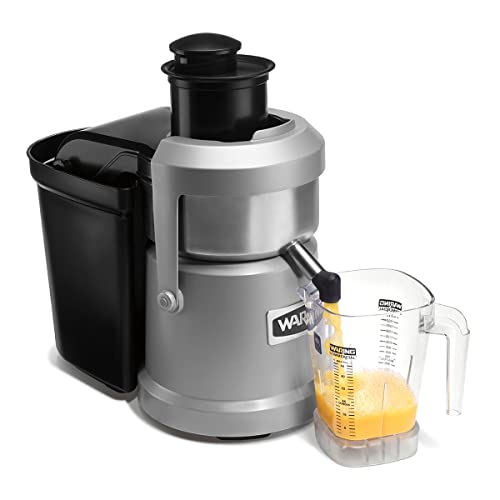
- 1.2 HP motor with continuous pulp ejection
- Stainless steel extraction components
- Designed for high-volume, all-day use
Best For: Busy juice bars, cafes, restaurants, and institutional kitchens
Best Value Workhorse
Hamilton Beach Big Mouth Centrifugal Juicer

- 3-inch chute reduces produce preparation
- 800-watt motor handles hard and soft foods
- Dishwasher-safe removable parts
Best For: Moderate-volume juice stations and budget-conscious buyers
Best Control and Convenience
Breville JE98XL Juice Fountain Plus
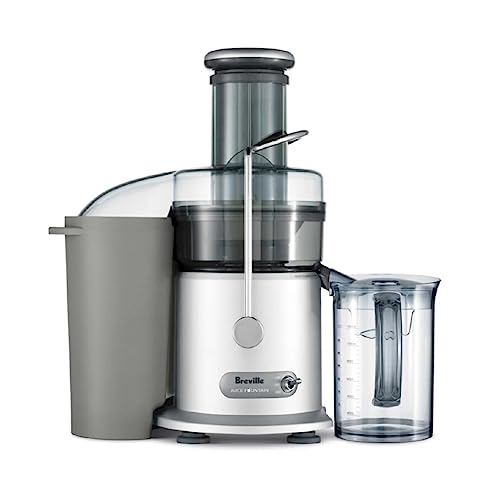
- Two speeds for varied produce
- 3-inch chute supports whole produce
- Froth separator and 35.2-ounce juice jug included
Best For: Small juice counters and users prioritizing flexibility
Best Compact Commercial-Style Option
Heavy-Duty Stainless Juice Extractor

- Stainless steel and aluminum alloy body
- Eight adjustable juice outlet positions
- Compact 13-by-10-by-14-inch footprint
Best For: Small food-service locations needing a metal extractor
Commercial Workhorse
Waring 12-Quart Pulp Eject Extractor

- 1.2 HP motor with 3,600 RPM operation
- Wide 3.15-inch feed chute
- 12-quart pulp container for longer runs
Best For: Busy juice bars, restaurants, and commercial kitchens
Quiet Stainless Pick
370W Low-Noise Commercial Juicer
- 2,800 RPM pure copper motor
- Automatic juice and residue separation
- Claimed 30–40 dB operating noise
Best For: Smaller counters and quieter commercial service areas
High-Throughput Option
- Rated for 80–100 kg per hour
- Eight juice outlets for flexible use
- Detachable net and automatic pulp separation
Best For: Juice shops, restaurants, cafeterias, and hotels
Best High-Power Pick

- 1200W motor with dual speeds
- 3-inch whole-produce feed chute
- 35-ounce jug and dishwasher-safe parts
Best For: Fast home or light-duty batch juicing
Best Quiet Commercial Option
- 2,800 RPM pure-copper motor
- Automatic juice and pulp separation
- 30–40 dB operating noise claim
Best For: Quieter moderate-volume juicing
Best for Small Shops
- Made for cafés, restaurants, and shops
- 2,800 RPM motor with residue separation
- Overheating protection and quieter operation
Best For: Small-business fruit and vegetable juicing
Best Heavy-Duty Pick – Waring WJX80 Commercial Juice Extractor
Waring Commercial Waring Products WJX80 120V 1.2HP HD Pulp Eject Juice Extractor, Stainless steel
Check Price On AmazonFor a centrifugal juicer commercial setup that needs to keep working through busy service, the Waring WJX80 emphasizes continuous extraction, heavy-duty construction, and easy cleanup. Its 1.2 HP motor, continuous pulp ejection, and stainless steel extraction components are suited to high-volume operations.
Best For: Smoothie shops, cafes, bars, restaurants, hotels, and healthcare establishments requiring all-day juice extraction.
Pros:
- Continuous pulp ejection supports extended, high-volume juicing.
- Stainless steel filter basket and shredder disc are designed for strong yield and reduced waste.
- Dishwasher-safe parts and an included cleaning brush simplify cleanup.
- Whole-fruit processing and a snap-up spout improve service convenience.
Cons:
- Its 18-inch depth and 20-inch height require substantial counter space.
- At 17 pounds, it is less convenient to move than smaller countertop models.
- The supplied care details also specify hand washing, so cleaning instructions should be confirmed before purchase.
The WJX80 is the strongest fit here for demanding commercial throughput. Its capacity, motor, and continuous pulp handling favor production environments over occasional home use.
Best Value Workhorse – Hamilton Beach Big Mouth Centrifugal Juicer
If you need a centrifugal juicer commercial buyers can also use in a lighter-duty setting, the Hamilton Beach Big Mouth offers a practical balance of speed, capacity, and cleanup. Its 3-inch feed chute accepts many whole fruits and vegetables, reducing preparation time.
Best For: Small cafes, juice stations, food-service prep, and users who want a large chute with dishwasher-safe removable parts.
Pros:
- The 3-inch chute can accommodate a whole apple, celery bunch, or handful of carrots.
- An 800-watt motor is designed to juice both hard and soft produce.
- The 80-ounce pulp bin helps reduce interruptions during larger batches.
- The pulp bin, juice bowl, lid, and pusher are dishwasher safe.
Cons:
- It has only one speed, offering less control than dual-speed models.
- The plastic and stainless steel construction is less explicitly commercial-duty than the Waring model.
- The supplied specifications list conflicting power figures, so verify the rating before purchase.
This model is a sensible choice when feed-chute convenience and straightforward maintenance matter more than specialized commercial features. Its warranty and large pulp bin add practical value for moderate workloads.
Best Control and Convenience – Breville JE98XL Juice Fountain Plus
The Breville JE98XL is a versatile option for buyers comparing a centrifugal juicer commercial setup with a more compact, feature-oriented machine. Its 3-inch chute, two-speed control, froth separator, and 850-watt motor make it adaptable across soft and firm produce.
Best For: Small juice counters, cafes, and home users who want adjustable speeds and convenient serving features.
Pros:
- Two speeds allow softer produce and leafy vegetables to be handled differently from dense produce.
- The 3-inch chute supports whole-fruit and whole-vegetable processing.
- The integrated froth separator helps pour juice with less froth.
- The removable pulp container, dishwasher-safe parts, and included cleaning brush support easier cleanup.
Cons:
- Its 1-liter juice capacity is smaller than the Waring’s listed 12-quart capacity.
- The one-year warranty is shorter than the coverage listed for the Hamilton Beach and Waring models.
- Its heavy-grade polymer housing may be less suited to intensive commercial use than a stainless steel commercial extractor.
The JE98XL stands out for control and user-friendly details rather than maximum production capacity. It is a good fit when menu flexibility, quick preparation, and cleaner pouring are priorities.
Best Compact Commercial-Style Option – Heavy-Duty Stainless Juice Extractor
For buyers seeking a centrifugal juicer commercial machine with a compact footprint, this stainless steel and aluminum alloy extractor offers a straightforward design for fruits and vegetables. Its adjustable outlet positions and separate juice-and-pulp handling add flexibility during service.
Best For: Juice shops, restaurants, school cafeterias, hotels, and home users seeking a compact stainless steel extractor.
Pros:
- Stainless steel and aluminum alloy construction is designed for durability.
- Eight juice outlet positions allow flexible placement for different setups.
- The separation system keeps juice and pomace apart.
- Its 13-by-10-by-14-inch dimensions make it relatively compact for a commercial-style unit.
Cons:
- The 370-watt rating is lower than the other powered juicers in this selection.
- The supplied notes do not list a warranty duration or detailed capacity in practical serving terms.
- Its button control and unspecified speed settings provide less documented control than the Breville.
This extractor may appeal to operations that value metal construction, adjustable discharge positioning, and a smaller footprint. However, buyers handling heavy daily volume should compare its lower power rating with their expected workload.
Commercial Workhorse – Waring 12-Quart Pulp Eject Extractor
For a centrifugal juicer commercial setup that needs sustained output, the Waring Pulp Eject Juice Extractor pairs a 1.2 HP brushless induction motor with a 12-quart pulp container. Its wide feed chute and durable metal construction make it suited to busy juice bars, restaurants, and commercial kitchens.
Best For: Juice shops, bars, and kitchens that prioritize continuous operation and reduced pulp-emptying downtime.
Pros:
- Heavy-duty 1.2 HP motor and 3,600 RPM speed support demanding commercial use.
- Wide 3.15-inch feed chute helps reduce produce preparation time.
- Large 12-quart pulp container and optional continuous pulp chute support longer runs.
- Powder-coated die-cast housing, stainless steel filter basket, and shredder disc are built for durability.
Cons:
- At 29.3 pounds and 24.5 inches tall, it requires substantial counter space.
- Hand-wash care may add cleanup time.
- Its 1.2 HP, 1,000-watt design is more equipment than occasional home users may need.
The Waring is the strongest fit here for high-volume service where capacity, feed-chute size, and continuous pulp handling matter more than compactness. It is a practical commercial choice for operators who want less interruption during busy shifts.
Quiet Stainless Pick – 370W Low-Noise Commercial Juicer
This centrifugal juicer commercial model offers a compact stainless-steel and aluminum build with a 370W pure copper motor reaching 2,800 RPM. Automatic juice-and-residue separation, overheating protection, and claimed 30–40 decibel operating noise make it worth considering for smaller service areas.
Best For: Small commercial counters, cafés, and users seeking a relatively quiet juicer for common fruits and vegetables.
Pros:
- 2,800 RPM motor is designed to extract juice efficiently from produce such as apples, carrots, celery, and oranges.
- Automatic separation helps deliver juice without directly blending in the residue.
- Aluminum construction and food-contact stainless steel components balance durability and weight.
- Lock-buckle and overheating-protection features support safer operation.
Cons:
- The 370W motor is less powerful than the 1.2 HP Waring model.
- The smaller feed chute may require more produce preparation.
- Its listed capacity and hourly throughput are not specified.
This model emphasizes quieter operation and straightforward juice-residue separation rather than maximum production capacity. It is a sensible option when counter space and noise are bigger concerns than all-day, high-volume throughput.
High-Throughput Option – VONZOER 370W Juice Extractor
For buyers comparing centrifugal juicer commercial equipment by stated throughput, the VONZOER 370W extractor is rated for 80–100 kg of produce per hour. It combines 2,800 RPM operation, three stainless steel rollers, multiple juice outlets, and automatic juice-residue separation for shops, restaurants, cafeterias, and hotels.
Best For: Commercial settings that need a compact extractor with a stated high processing rate and flexible outlet positioning.
Pros:
- Rated output of 80–100 kg per hour supports high-volume service.
- Eight juice outlets and a 0.7-inch juice outlet offer flexible dispensing.
- Food-grade stainless steel and aluminum alloy construction is designed for heavy-duty use.
- Detachable juicing net and automatic pulp separation simplify the extraction process.
Cons:
- It is not suitable for fruits with hard cores.
- Hand-wash care may require more manual cleanup.
- The 370W motor has less rated power than the Waring’s 1.2 HP motor.
The VONZOER stands out for its stated hourly capacity and outlet flexibility in a relatively compact footprint. Confirm your produce requirements before buying, especially if hard-core fruit will be part of the menu.
Best High-Power Pick – 1200W Centrifugal Juicer
For shoppers comparing a centrifugal juicer commercial setup with fast home or light-duty service, this 1200W model emphasizes speed, wide-mouth feeding, and straightforward cleanup. Its 3-inch chute, dual speeds, and 35-ounce jug make it practical for processing a variety of produce with less preparation.
Best For: Fast batch juicing of whole fruits and vegetables at home or in small-scale beverage service.
Pros:
- Powerful 1200W motor and two speed settings for soft and hard produce.
- 3-inch feed chute accepts many whole fruits and vegetables, reducing prep work.
- Dishwasher-safe components, a no-drip spout, and a self-contained pulp basin simplify cleanup.
- Includes a BPA-free 35-ounce jug with foam separator and UL certification.
Cons:
- The 35-ounce jug is smaller than what a busy commercial counter may require.
- Its 120V corded design is better suited to standard outlets than large production lines.
This is the strongest choice of the three when motor power and reduced preparation time matter most. Consider a larger commercial-format machine if continuous, high-volume service is your priority.
Best Quiet Commercial Option – 370W Juice Extractor
This commercial juice extractor is a practical centrifugal juicer commercial buyers can consider when quieter operation and separated juice are important. The 370W pure-copper motor reaches 2,800 RPM, while detachable, dishwasher-safe internal parts support routine cleaning.
Best For: Small businesses or households seeking quieter centrifugal extraction with automatic pulp separation.
Pros:
- 2,800 RPM motor is designed for efficient fruit and vegetable extraction.
- Automatically separates juice from pulp for a smoother, lower-fiber drink.
- Advertised operating noise of 30–40 dB is suitable for quieter environments.
- Lock-buckle construction and overheating protection add useful safety features.
Cons:
- At 370W, it has considerably less motor power than the 1200W alternative.
- Product care instructions specify hand washing, despite some detachable parts being dishwasher safe in the notes.
Choose this model for a quieter workflow and automatic residue separation rather than maximum motor power. Its aluminum and stainless-steel construction offers a practical balance for moderate use.
Best for Small Shops – Heavy-Duty 370W Juicer
For a centrifugal juicer commercial application in a café, restaurant, hotel, milk tea shop, or grocery store, this 370W model focuses on simple operation and consistent fruit-and-vegetable extraction. Its 2,800 RPM pure-copper motor automatically separates juice from residue and includes overheating protection.
Best For: Small food-service businesses that need a compact electric extractor for varied produce.
Pros:
- Designed for businesses including restaurants, cafés, hotels, and grocery stores.
- 2,800 RPM motor and claimed juice yield of about 75% support efficient extraction.
- Automatic residue separation produces smoother juice with fewer rough fibers.
- Lock-buckle safety design, overheating protection, and 30–40 dB noise claim.
Cons:
- The smaller feed chute may require more cutting and preparation.
- Hand-wash care instructions may add time between batches.
- The 370W motor may be less suitable for demanding continuous production.
This model makes sense for smaller commercial settings that value a quieter machine and separated juice. For heavier throughput or minimal prep, the higher-powered wide-chute option is likely more convenient.
How We Picked the Best Centrifugal Juicer Commercial
We evaluated these machines around the demands that matter most in a professional setting: motor strength, feed-chute size, juice and pulp capacity, construction, operating speed, expected throughput, and ease of cleaning. Stainless-steel components can improve durability and make a machine more suitable for demanding environments, while a wide feed chute reduces prep time for larger fruits and vegetables.
We also considered practical differences between high-capacity commercial extractors and more compact centrifugal juicers. A powerful machine is not automatically the best choice if it takes too long to clean, lacks suitable containers, or is oversized for your daily volume.
Quick Comparison
- Best for high-volume service: Look for a heavy-duty motor, large pulp capacity, durable metal construction, and a stated commercial throughput.
- Best for cafés and restaurants: A wide feed chute and straightforward controls help reduce prep and serving time.
- Best for smaller operations: Compact models with separate pulp collection and manageable cleanup may offer better overall value.
- Best for varied produce: Dual-speed controls can provide more flexibility when juicing soft fruits and firm vegetables.
Key Buying Factors for a Centrifugal Juicer Commercial
Motor Power and Throughput
Wattage provides a useful starting point, but it does not tell the whole story. Look for a motor and cutting system suited to your expected workload. If you plan to serve juice continuously, prioritize commercial construction and a clearly stated hourly capacity over peak wattage alone.
Feed Chute Size
A 3-inch feed chute can accommodate more produce with less cutting, which is particularly useful during busy service. Smaller chutes may be acceptable when ingredients are already prepared or when counter space is limited.
Capacity and Pulp Management
Large pulp containers reduce interruptions, while separate pulp and juice collection makes the workflow easier to manage. Check whether the included juice jug or outlet fits the volume you typically produce and the containers used at your workstation.
Cleaning and Safety
Removable parts, accessible strainers, locking mechanisms, and overload protection can save time and reduce operating problems. Confirm that the parts you must clean after each batch are easy to remove and compatible with your sanitation routine.
Who Should Buy Which Centrifugal Juicer Commercial?
Choose a heavy-duty stainless-steel extractor with a larger pulp capacity if you operate a juice bar, produce market, or restaurant with sustained demand. A commercial model with documented throughput is the better fit for catering and other batch-focused businesses.
For cafés and casual food-service locations, prioritize a wide-mouth machine with simple controls and quick cleanup. A compact commercial centrifugal juicer may be preferable when counter space, storage, and moderate daily volume matter more than maximum capacity.
Home users who want occasional fresh juice should generally avoid paying for an oversized commercial unit unless they value speed, durability, or frequent entertaining. In every case, match the machine to realistic daily use, available electrical service, ventilation, cleaning time, and replacement-part support.