The best bag sealing machine can make packaging faster, cleaner, and more consistent without requiring a large commercial setup. Under $300, you can choose from simple impulse sealers, adjustable digital models, and continuous band sealers for higher-volume work.
This roundup compares 10 options across sealing width, operating style, temperature control, speed, portability, and intended workload so you can choose the right machine for your bags and packaging routine.
Best 10 Bag Sealing Machines Under 300 Picks for 2026
Best Heavy-Duty Manual Pick
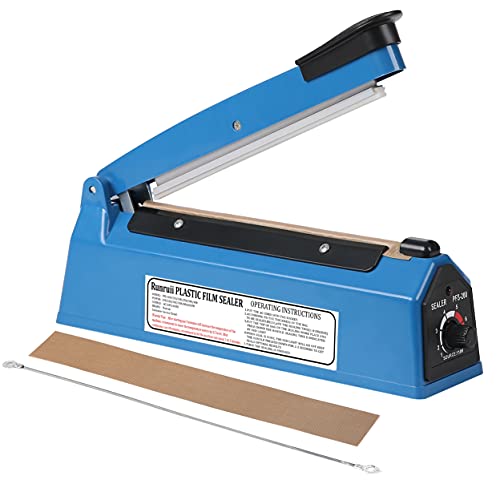
- 12-inch sealing width
- Eight temperature settings
- No warm-up time
Best For: Frequent manual sealing of larger PE and PP bags
Best Conveyor Value
Commercial Continuous Band Sealer

- Up to 12 m/min sealing
- 0–300°C temperature range
- 6–12 mm seal width
Best For: Repetitive packaging in small commercial operations
Best Digital Commercial Pick

- Up to 16 m/min speed
- Digital 0–300°C temperature control
- 6–12 mm adjustable seal width
Best For: Small commercial operations with varied packaging materials
Best Budget Tabletop Pick

- Eight heat settings for different plastic bags
- No warm-up time and compact tabletop design
- Includes extra replacement grip
Best For: Household, retail, and light-duty PE or PP bag sealing
Best for Continuous Production
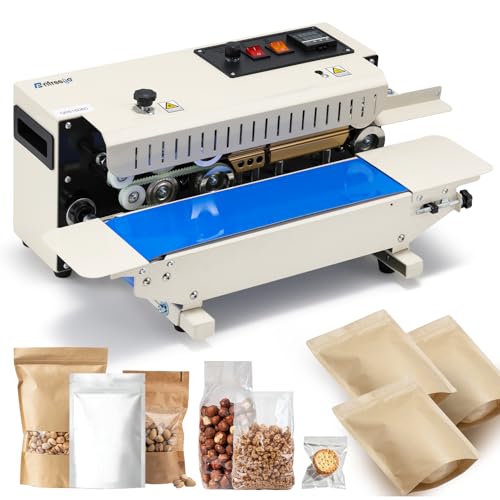
- Adjustable 0–12 m/min sealing speed
- Digital temperature control from 0–300°C
- Handles plastic, kraft paper, and tin foil bags
Best For: Small production, bakery, and food-packaging workflows
Best Compact Multi-Use Option
8-Inch Automatic Impulse Sealer

- Automatic electronic heat and time control
- Works with plastic, PE, PP, and foil bags
- Compact design with included repair kit
Best For: Households, restaurants, retail shops, and small factories
Best Overall Value

- 600W automatic continuous sealing
- 6–12 mm adjustable seal width
- Supports embossing and alphanumeric printing
Best For: Flexible small-business and workshop packaging
Best for Vertical Sealing
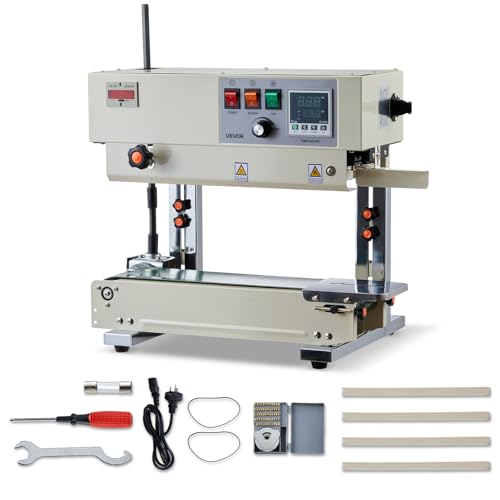
- Vertical automatic continuous operation
- Built-in bag counter and roller printing
- Temperature range up to 572°F
Best For: Upright production lines needing printed package details
Best for Commercial Throughput

- Up to 16 m/min sealing speed
- 0–300°C adjustable temperature
- Integrated 6-inch conveyor belt
Best For: Commercial packaging with varied bag materials
Best Heavy-Duty Manual Pick – 12-Inch Impulse Heat Sealer
For shoppers comparing bag sealing machines under 300, this 12-inch manual impulse sealer offers a straightforward option for sealing PE and PP plastic bags. It needs no warm-up time, includes eight temperature settings, and is designed for household, retail, grocery, and light industrial use.
Best For: Users who need a wider manual seal for frequent plastic-bag packaging.
Pros:
- 12-inch sealing width suits larger bags.
- Eight temperature settings accommodate different bag materials.
- No warm-up time and simple manual operation.
- Built-in fuse and reinforced construction support regular use.
Cons:
- It seals but does not cut bags.
- Manual pressing is required for each bag.
- Its 3.5-pound weight and 15.7-inch length take more workspace than smaller sealers.
This is a practical choice when seal width matters more than automation. Hold the handle down for about 2–3.5 seconds, then adjust the temperature for the material being sealed.
Best Conveyor Value – Commercial Continuous Band Sealer
Among bag sealing machines under 300, this continuous band sealer is aimed at repetitive packaging rather than occasional household use. Its conveyor-assisted design feeds bags automatically, while adjustable heat and a 6–12 mm seal width support food, bakery, snack, kraft paper, aluminum foil, and CPP heat-sealable packaging applications.
Best For: Small commercial kitchens, bakeries, shops, and production areas handling recurring packaging tasks.
Pros:
- Continuous sealing speed reaches up to 12 meters per minute.
- Temperature adjusts from 0–300°C.
- Supports approximately 6–12 mm seal widths.
- Includes a transfer table, toothed belt, spare sealing belt, and replacement fuse.
Cons:
- At 27.1 pounds, it is considerably less portable than manual models.
- Its 23-inch length and conveyor design require dedicated workspace.
- Suitable packaging must be heat-sealable.
This machine makes the most sense when consistent throughput is the priority. The conveyor and continuous band format can reduce repetitive hand-feeding, while the included maintenance parts add convenience for ongoing use.
Best Compact Budget Pick – 8-Inch Manual Impulse Sealer
For shoppers seeking bag sealing machines under 300 for everyday plastic packaging, this compact 8-inch impulse sealer keeps the controls simple. It works with PP and PE bags up to a recommended 10-mil seal thickness, offers eight temperature settings, and requires no warm-up period.
Best For: Home users, small retailers, and grocery or produce applications involving shorter plastic bags.
Pros:
- Compact 8-inch format fits smaller work areas.
- Eight temperature settings provide material flexibility.
- No warm-up time is needed before sealing.
- Built-in fuse and included replacement element grip add practical value.
Cons:
- It cannot cut bags.
- Recommended maximum seal thickness is 10 mils.
- Each bag requires manual pressure for roughly 2–3.5 seconds.
This is a sensible entry-level option when portability and uncomplicated operation matter. The indicator light helps show when sealing is complete, but users should keep the handle pressed for the recommended time to achieve a smooth seal.
Best Digital Commercial Pick – Adjustable-Speed Bag Sealer
This digital model is one of the more capable bag sealing machines under 300 for small commercial packaging. It combines automatic feeding, a built-in conveyor, adjustable speed up to 16 meters per minute, 0–300°C temperature control, and a selectable 6–12 mm seal width.
Best For: Small factories, snack shops, and packaging workshops needing faster, repeatable sealing.
Pros:
- Automatic sealing reaches up to 16 meters per minute.
- Digital temperature and speed adjustments improve control.
- Handles stated bag thicknesses from 0.02–0.16 mm.
- Compatible with plastic, mylar, aluminum foil, composite, and paper packaging bags.
Cons:
- At 25 pounds, it is not designed for frequent relocation.
- It is more equipment than occasional users may need.
- Proper settings still need to be matched to the bag material.
Choose this sealer when throughput and adjustment range are more important than a small footprint. Its conveyor-fed automatic operation is suited to longer packaging runs, while the digital controls help tune heat and speed for different materials.
Best Budget Tabletop Pick – 8-Inch Manual Impulse Sealer
If you need bag sealing machines under 300 for household, retail, produce, or grocery use, this compact 8-inch impulse sealer is a practical manual option. It needs no warm-up time, offers eight temperature settings, and is designed for PE and PP plastic bags.
Best For: Home users, small retailers, produce sellers, and occasional plastic-bag sealing.
Pros:
- Eight adjustable temperature settings accommodate different plastic packaging bags.
- No warm-up time and a lightweight tabletop design support quick use.
- Built-in fuse and automatic heat cycling add convenience and safety.
- Includes an extra replacement grip and is rated to seal more than 10,000 bags.
Cons:
- Manual operation requires holding the handle for about 2–3.5 seconds.
- The 8-inch sealing width may not suit larger bags.
- Designed for PE and PP bags, so material compatibility should be checked.
This is a straightforward choice when low-cost, occasional sealing matters more than automation or high-volume production. Its compact format and adjustable heat make it versatile for everyday plastic-bag work.
Best for Continuous Production – 650W Automatic Band Sealer
Among bag sealing machines under 300, this continuous band sealer stands out for users who need automatic operation and a steadier workflow. Its adjustable 0–12 m/min speed, 0–300°C digital temperature control, and 650W motor support repeated sealing across several bag types.
Best For: Bakeries, food sellers, small production lines, and users sealing bags continuously.
Pros:
- Automatic continuous sealing with adjustable speed from 0–12 m/min.
- Digital temperature control from 0–300°C supports different materials.
- Works with plastic, kraft paper, and tin foil bags.
- Includes toothed belts, a Teflon belt, backup fuses, and other maintenance accessories.
Cons:
- At 23 pounds, it is less portable than a small impulse sealer.
- Its continuous-band design may be more machine than occasional users need.
- Setup and maintenance can be more involved than manual sealing.
This model is the better fit when throughput and repeatable sealing are priorities. The digital controls and included replacement parts make it more suitable for ongoing food or merchandise packaging than sporadic household use.
Best Compact Multi-Use Option – 8-Inch Automatic Impulse Sealer
For shoppers comparing bag sealing machines under 300, this 8-inch Jinhong impulse sealer offers compact operation with electronic heat and time control. It is built for PE, PP, foil, and other packing bags, making it useful in homes, restaurants, retail shops, and small factories.
Best For: Small businesses and households sealing assorted plastic, foil, and retail packaging bags.
Pros:
- Electronic controls automatically manage sealing time and heat.
- No warm-up time is required before sealing.
- Suitable for plastic, PP, PE, foil, and many other packing bags.
- Compact body with automatic power-off behavior and an included repair kit.
Cons:
- The 8-inch sealing width limits the size of bags it can close.
- Users must adjust the temperature according to bag thickness.
- Impulse sealing still requires pressing the handle for about 1–2 seconds.
This sealer balances portability with broader material compatibility. It is a sensible choice for mixed light-duty packaging when you want more automatic control than a basic manual impulse unit without moving to a continuous band machine.
Best Overall Value – VEVOR Horizontal Band Sealer
For shoppers comparing bag sealing machines under 300, this VEVOR horizontal band sealer offers automatic continuous operation, digital temperature control, and a 600W motor. Its adjustable 6–12 mm seal width and compatibility with 0.02–0.8 mm plastic bags make it a flexible choice for recurring packaging work.
Best For: Small businesses, workshops, and home users that need versatile horizontal sealing with optional printing.
Pros:
- Automatic sealing speeds reach up to 16 m/min.
- Adjustable 6–12 mm sealing width supports various bag types.
- Supports embossing and alphanumeric printing.
- Includes replacement belts, a fuse, and other maintenance accessories.
Cons:
- At 21.7 pounds, it is not especially lightweight.
- The 600W motor and carbon-steel construction may be more machine than occasional users need.
This is a strong all-around option when you want continuous automatic sealing, broad bag compatibility, and useful marking functions in one machine.
Best for Vertical Sealing – VEVOR Vertical Band Sealer
Among bag sealing machines under 300, this vertical VEVOR model stands out for its upright configuration and adjustable temperature and speed controls. It seals bags up to 52.5 ft/min, includes a built-in counter, and can add dates, batches, or specifications with interchangeable type wheels.
Best For: Shops, bakeries, warehouses, and workshops that prefer vertical feeding and printed package identification.
Pros:
- Vertical design can suit upright bag-feeding workflows.
- Temperature adjusts from 32–572°F, while sealing speed is adjustable.
- Built-in counter tracks bag quantity during production.
- Includes an embossing roller, PTFE-coated belts, tools, and a spare fuse.
Cons:
- Its 21.65-inch height and 28-pound weight require dedicated workspace.
- The supplied details specify compatibility with plastic bags 0.001–0.03 inches thick, a narrower range than the horizontal model.
Choose this model when vertical operation, production counting, and changeable printing wheels are more important than a compact footprint.
Best for Commercial Throughput – FRC-520 Continuous Sealer
If your priority is steady commercial packaging, this FRC-520 is a practical contender among bag sealing machines under 300. Its automatic continuous design combines speeds up to 16 m/min, digital temperature control from 0–300°C, and a 6-inch conveyor belt for smoother bag feeding.
Best For: Commercial users sealing plastic, aluminum foil, compound, or paper bags on a desktop-style production setup.
Pros:
- Sealing speed reaches up to 16 m/min for higher workflow output.
- Adjustable 6–12 mm seal width handles many commercial bags and pouches.
- 0–300°C temperature range supports adjustment for different materials.
- Integrated 6-inch conveyor belt helps feed bags smoothly.
Cons:
- The supplied compatibility range is limited to bags 0.02–0.16 mm thick on both sides.
- It does not list printing or embossing functions among the supplied features.
The FRC-520 is a focused choice for users who value adjustable heat, continuous throughput, and conveyor-assisted feeding over added marking features.
How We Picked the Best Bag Sealing Machines Under 300
We focused on the features that matter most in everyday packaging: seal width, compatibility with common PE and PP bags, temperature adjustment, sealing speed, controls, construction, and ease of maintenance. The selection includes manual impulse sealers for occasional or small-batch use and continuous band models for businesses that need a steadier workflow.
We also considered practical differences between horizontal and vertical designs, including how easily each format handles granular, liquid, or irregularly shaped contents. Replacement heating elements, repair kits, conveyors, printing functions, and adjustable settings can affect long-term value, so those features are important when comparing similar machines.
Quick Comparison
| Machine type | Best for | Main advantage | Typical trade-off |
|---|---|---|---|
| Manual impulse sealer | Home users and light packaging | Simple, compact operation | Requires manually positioning every bag |
| Digital impulse sealer | Repeatable small-batch work | More precise temperature control | Usually slower than continuous systems |
| Horizontal band sealer | Frequent upright or flat-bag sealing | Continuous operation and adjustable speed | Larger footprint and more setup |
| Vertical band sealer | Filled bags and heavier contents | Better support for upright packaging | May require more careful alignment |
Key Buying Factors for Bag Sealing Machines Under 300
Sealing Width and Bag Material
Match the bar or band width to your largest bags. Eight-inch models suit many household and small-business packages, while 12-inch sealers provide more flexibility. Confirm that the machine supports the thickness and material you use, especially PE or PP film.
Impulse Versus Continuous Sealing
Impulse models heat only when the jaws are engaged, which keeps them affordable and energy-efficient for intermittent work. Continuous band sealers move bags through the machine and are better for repeated batches, production lines, or packaging several dozen items at a time.
Temperature, Speed, and Controls
Adjustable temperature helps prevent weak seals or melted film when switching between materials. Variable speed is especially useful on continuous machines because thicker bags and heat-sensitive films may need different settings. Digital controls can make repeatable results easier.
Maintenance and Workspace
Check whether heating elements, belts, PTFE tape, and other wear parts are replaceable. Measure your counter or workbench before buying, and account for clearance around the conveyor or bag feed. A compact manual sealer may be the better value if storage space is limited.
Who Should Buy Which Bag Sealing Machines Under 300?
Choose an 8-inch manual impulse sealer for occasional food storage, craft projects, retail samples, or small batches. A 12-inch manual model is a better choice when you regularly seal wider bags and want extra working room.
Pick a digital impulse machine if consistent settings matter but your volume is still moderate. For frequent packaging, a horizontal continuous band sealer offers faster throughput and less repetitive hand work. Choose a vertical band sealer when bags contain powders, grains, liquids, or other contents that are easier to handle upright.
Before ordering, prioritize the bag material, maximum package width, expected daily volume, and available workspace. Those four factors usually matter more than extra features, and they will help you select among these Bag Sealing Machines Under 300 with confidence.