Making fresh cider at home does not require commercial equipment. The best cider presses under $300 can handle apples, grapes, and other soft fruit while fitting comfortably into a home workshop, garage, or seasonal kitchen setup.
This roundup compares manual wood and stainless-steel presses across capacity, pressing method, construction, and ease of cleaning, so you can choose a model that matches your batch size and brewing plans.
Best 10 Cider Presses Under 300 Picks for 2026
Best Wooden Value

- 3.17-gallon wood basket
- Extended handle for easier pressing
- Includes a filter bag
Best For: Small-batch cider and traditional fruit pressing
Best Large-Capacity Steel
5.8-Gallon Hydraulic Fruit Press

- 5.81-gallon outer barrel
- 6,613.87 pounds of hydraulic pressure
- Food-grade 304 stainless steel
Best For: Frequent or larger-batch cider and wine making
Best Wooden Batch Upgrade

- 18-liter wooden basket
- Processes about 22–33 pounds per batch
- T-handle and included filter bag
Best For: Larger home batches with a traditional wood press
Best Compact Hydraulic
2.64-Gallon Stainless Steel Press
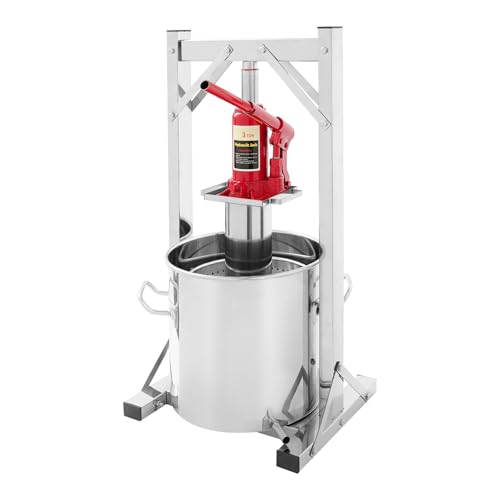
- 2.64-gallon fruit bucket
- 3-ton hydraulic pressing force
- Inner filter bucket for smoother juice
Best For: Small home batches with reduced manual effort
Best Large-Capacity Pick
3.69-Gallon Manual Fruit Press

- Large 14-liter capacity for bigger batches
- Stable cast iron-and-steel construction
- Includes two food-grade filter bags
Best For: Families, small farms, and batch cider making
Best Ready-to-Use Option
2.38-Gallon Heavy-Duty Cider Press

- Fully assembled for immediate use
- Cast iron base with stainless steel basket
- Swing-open beam simplifies filling
Best For: Home brewers and beginners
Best Stainless Steel Design

- Stainless steel pressing components
- Disassembles for easier cleaning
- Includes two food-grade filter bags
Best For: Home users prioritizing easy maintenance and versatility
Hydraulic Stainless Workhorse
5.8-Gallon Hydraulic Fruit Wine Press

- 304 stainless steel construction
- 3-ton hydraulic pressing force
- Large outer and filter buckets
Best For: Larger home, farm, or small-winery batches
Small-Batch Wooden Pick
1.6-Gallon Beechwood Cider Press

- Natural beechwood basket
- Manual spiral pressing mechanism
- Includes two food-grade filter bags
Best For: Small household juice and cider batches
High-Capacity Pressing Station
22L Stainless Steel Cider Press

- 22L/5.81-gallon outer capacity
- Hydraulic jack reduces manual fatigue
- Includes separate filter bucket
Best For: High-volume fruit, cider, and juice pressing
Best Wooden Value – 3.17-Gallon Blue Fruit Press
For shoppers comparing cider presses under 300, this traditional wooden model offers a compact 3.17-gallon capacity and a manual design suited to small fruit-processing jobs. Its extended handle and phase-in pressing action are intended to reduce effort while pressing apples, grapes, and other produce.
Best For: Families, small fresh-juice operations, and users who prefer a vintage wooden press.
Pros:
- Solid wood basket with a 3.17-gallon capacity.
- Extended hand shank is designed to make pressing easier.
- Thicker press plate and larger stressed area may help improve juice extraction.
- Includes one filter bag and can handle fruit, pomace, and honeycomb.
Cons:
- Manual operation still requires physical effort.
- Its capacity is smaller than the larger presses in this roundup.
- At about 10.02 kg, it is not especially lightweight.
This press is a practical choice when you want a traditional wood-and-handle setup, moderate batch size, and broad fruit-processing versatility.
Best Large-Capacity Steel – 5.8-Gallon Hydraulic Fruit Press
Among cider presses under 300, this stainless steel hydraulic model stands out for its larger 5.81-gallon outer barrel and reduced manual effort. The food-grade 304 stainless steel construction is designed for hygienic juice and wine extraction, while the hydraulic jack supplies up to 6,613.87 pounds of pressure.
Best For: Larger home batches, frequent cider making, and users who want a sturdy stainless steel press.
Pros:
- Food-grade 304 stainless steel is rust-resistant and easy to keep sanitary.
- Hydraulic jack helps reduce hand effort during extraction.
- 5.81-gallon outer barrel and 2.91-gallon filter barrel support substantial batches.
- Reinforced triangular brackets are rated for loads up to 330.69 pounds.
Cons:
- Its larger capacity may be more than casual users need.
- The supplied notes do not specify the product’s weight or dimensions.
Choose this model if batch size, stainless steel construction, and hydraulic pressing power matter more than having the simplest or smallest setup.
Best Wooden Batch Upgrade – 4.75-Gallon Red Fruit Press
This 4.75-gallon wooden press is a strong middle-ground option for shoppers seeking cider presses under 300. Its T-shaped handle and phase-in pressing design are intended to make operation easier, while the larger basket can process approximately 22 to 33 pounds of fruit at one time.
Best For: Home cider makers who want a traditional wooden press with more capacity than a compact model.
Pros:
- 18-liter, 4.75-gallon capacity supports larger home batches.
- T-shaped handle is designed for more stable, easier operation.
- Thicker press plate and broad pressing area are intended to improve juice yield.
- Includes one filter bag and works with apples, grapes, and other fruit.
Cons:
- At 17.76 kg, it is relatively heavy to move.
- Wood construction requires hand washing and careful maintenance.
- Manual pressing may still demand effort despite the handle design.
This is a sensible pick for users who like the look and feel of a vintage wooden press but need a larger batch size for regular home use.
Best Compact Hydraulic – 2.64-Gallon Stainless Steel Press
For buyers comparing cider presses under 300, this compact stainless steel model combines a 2.64-gallon bucket with a hydraulic jack rated for up to 3 tons, or 6,613.87 pounds, of pressure. It is designed for home winemaking and small-scale pressing without requiring a power connection.
Best For: Home users who want hydraulic assistance in a smaller, manually controlled footprint.
Pros:
- Compact 2.64-gallon bucket suits smaller batches.
- Hydraulic jack supplies strong pressing force while reducing fatigue.
- 201 and 304 stainless steel construction is sturdy and impact-resistant.
- Inner filter bucket and sanitary tray are designed for cleaner, smoother juice.
Cons:
- Its capacity is limited compared with the larger 5.81-gallon model.
- Manual operation still requires handling the hydraulic jack.
- The mixed 201 and 304 stainless steel construction is not exclusively 304 grade.
This press makes the most sense when you want hydraulic pressing power and stainless steel construction but do not need a large commercial-style batch capacity.
Best Large-Capacity Pick – 3.69-Gallon Manual Fruit Press
For shoppers comparing cider presses under 300, this VEVOR model stands out for its 3.69-gallon capacity and sturdy cast iron-and-steel construction. Its swing-open crossbeam simplifies loading, while the manual T-handle and included filter bags support straightforward home juice and cider making.
Best For: Families, small farms, wineries, and anyone who wants a high-capacity manual press for apples, grapes, berries, and other produce.
Pros:
- Large 14-liter capacity suits gatherings, parties, and batch pressing.
- Cast iron crossbeam and triangular base provide a stable pressing setup.
- Includes two food-grade filter bags and a removable stainless steel basket.
- Versatile enough for juice, fruit wine, pulp, cheese, and olive oil.
Cons:
- At 34 pounds, it is relatively heavy to move and store.
- Pre-crushing or pre-cutting fruit is recommended for better results.
- Hand washing is specified for product care.
This is a practical choice when capacity matters more than portability. The removable basket and included bags make cleanup and setup easier, while the manual design avoids the need for power.
Best Ready-to-Use Option – 2.38-Gallon Heavy-Duty Cider Press
Among cider presses under 300, this 2.38-gallon model focuses on durability and convenience. It arrives fully assembled, uses a cast iron base with a stainless steel basket, and has a swing-open crossbeam for faster filling when pressing apples, grapes, berries, or similar produce.
Best For: Home brewers and beginners who want a sturdy manual press that is ready to use without assembly.
Pros:
- Heavy-duty cast iron base and legs support demanding pressing tasks.
- Fully assembled for a quicker start.
- Swing-open crossbeam makes filling more convenient.
- Can handle pre-shredded apples, grapes, berries, tomatoes, and rhubarb.
Cons:
- Its 2.38-gallon capacity is smaller than the other presses in this roundup.
- Fruit should be pre-shredded for pressing.
- The 35.4-pound weight may make relocation inconvenient.
This press is a sensible fit for users who prioritize a ready-to-use, durable frame over maximum capacity. Foot holes add stability, and simple hose-and-dry cleaning keeps maintenance straightforward.
Best Stainless Steel Design – 3.17-Gallon Countertop Press
For shoppers seeking cider presses under 300 with an easy-clean design, this VEVOR 3.17-gallon press is a strong contender. Its stainless steel pressing plate, barrels, and support components are built for durability, while the manual triangular handle provides simple pressure control.
Best For: Home users who want a corrosion-resistant stainless steel press for cider, juice, wine, olive oil, cheese, or fruit purée.
Pros:
- Thickened stainless steel pressing plate supports thorough extraction.
- Stainless steel construction resists wear and corrosion.
- Inner and outer barrels can be disassembled for cleaning.
- Includes two food-grade filter bags and offers a 12-liter capacity.
Cons:
- Pre-cutting fruit is recommended for better results.
- The 3.17-gallon capacity is moderate rather than extra-large.
- The product care details specify hand washing, despite the notes also mentioning dishwasher convenience.
This model balances useful capacity with a mostly stainless steel construction and convenient disassembly. It is particularly appealing if cleanup and resistance to corrosion are priorities in a home pressing setup.
Hydraulic Stainless Workhorse – 5.8-Gallon Hydraulic Fruit Wine Press
For shoppers comparing cider presses under 300, this stainless steel model stands out for its hydraulic assistance and larger batch capacity. Its 3-ton jack, filter bucket, and reinforced frame are suited to pressing apples, grapes, and other fruit with less manual effort.
Best For: Home kitchens, small wineries, farms, and larger fruit or cider batches.
Pros:
- 304 stainless steel construction is corrosion-resistant and designed for food-contact use.
- Hydraulic jack provides up to 3 tons of pressing force.
- 5.81-gallon outer bucket and 2.91-gallon filter bucket support larger pressing sessions.
- Reinforced triangular supports help stabilize the freestanding frame.
Cons:
- Hand-wash care may require more cleanup time.
- Its nearly 30-inch height and 13-pound weight may be more than some compact setups need.
This is a practical choice when pressing capacity and reduced hand effort matter more than having the smallest possible cider press. The stainless construction and included filter bucket also make it convenient for repeated food and beverage preparation.
Small-Batch Wooden Pick – 1.6-Gallon Beechwood Cider Press
If you are comparing cider presses under 300 for household use, this 1.6-gallon manual model offers a compact alternative to hydraulic equipment. Its beechwood basket, spiral handle, pressing blocks, and filter bags are designed for apples, grapes, berries, and other prepared fruit.
Best For: Families, parties, and small-batch juice or cider making.
Pros:
- Natural beechwood basket has a smooth, burr-free surface.
- Extended handle and spiral mechanism make manual pressing straightforward.
- Includes two food-grade filter bags and eight supporting pressing blocks.
- Compact 1.6-gallon capacity suits smaller batches.
Cons:
- Hard fruit must be crushed before pressing.
- Smaller capacity is less suitable for high-volume cider production.
- Uncoated natural wood requires careful hand washing.
This press makes the most sense for buyers who want a traditional, compact setup and do not need hydraulic force. Its included filter bags and manual mechanism keep the equipment simple, while the limited capacity favors occasional small batches.
High-Capacity Pressing Station – 22L Stainless Steel Cider Press
Among cider presses under 300, this 22-liter stainless steel press is aimed at buyers who want substantial capacity with hydraulic assistance. The 6613.87-pound-rated jack, outer barrel, filter barrel, and reinforced frame support efficient pressing of fruit, vegetables, and other ingredients.
Best For: Larger cider, fruit wine, vegetable, honey, or cheese-making batches.
Pros:
- Polished 304 stainless steel is corrosion-resistant and easy to clean.
- Hydraulic jack supplies powerful, stable pressing force while reducing fatigue.
- 5.81-gallon outer barrel and 2.91-gallon filter barrel accommodate larger sessions.
- Reinforced triangular brackets support stability during operation.
Cons:
- Hand-wash care may be less convenient than machine-washable equipment.
- Its larger capacity may be unnecessary for occasional small-batch users.
This model is a strong fit when batch size and pressing power are priorities. Its stainless construction and separate filter barrel are useful for repeated preparation, while the hydraulic jack can make extended pressing less tiring.
How We Picked the Best Cider Presses Under 300
We focused on the features that matter most for home pressing: basket capacity, frame stability, pressing force, food-contact materials, juice collection, and cleanup. The selection includes traditional solid-wood basket presses, stainless-steel models, and hydraulic-jack designs at several sizes.
Capacity claims are useful, but they do not represent the exact amount of finished juice. Fruit variety, ripeness, grinding quality, and how firmly the pulp is packed all affect yield. We also considered whether a press is practical for occasional seasonal use or better suited to repeated batches.
Quick Comparison
| Press type | Typical advantage | Best for |
|---|---|---|
| Compact 1.6–2.64 gallon | Smaller footprint and easier handling | Beginners, small gardens, and test batches |
| 3.17–3.69 gallon | Balanced capacity and portability | Most household cider makers |
| 4.75–5.8 gallon | Fewer reloads for larger harvests | Frequent pressing and larger families |
| Hydraulic-jack models | High pressing force with less manual effort | Dense fruit pulp and demanding batches |
| Wood-basket models | Traditional appearance and straightforward operation | Classic cider-making setups |
Key Buying Factors for Cider Presses Under $300
Capacity and Batch Size
Choose capacity based on how much fruit you normally process at once. A compact press is easier to store and reload, while a 5.8-gallon model can save time during a large harvest. Remember that the fruit generally needs to be crushed or milled before pressing.
Pressing Mechanism
T-handle and pole-handle presses are simple, affordable, and easy to maintain. Hydraulic-jack presses can apply substantial force with less physical effort, but they may be heavier and require more careful setup. A stable cross beam and rigid frame are important for either style.
Construction and Cleanup
Stainless steel is appealing for frequent use because it resists staining and is relatively easy to sanitize. Wood baskets offer a traditional design but need prompt washing, thorough drying, and periodic inspection. Check whether the press includes a filter bag, collection tray, or removable components before buying.
Workspace and Storage
Measure your available work surface and overhead clearance. Larger presses can be awkward to move when loaded, so weight, handles, and base stability matter. Set the unit on a level, durable surface that can tolerate spills.
Who Should Buy Which Cider Presses Under 300?
Choose a compact press if you make small batches, have limited storage, or are learning the process. Choose a mid-size 3-gallon-class model if you want the most versatile balance for routine household cider making. Choose a larger 4.75- to 5.8-gallon press if you regularly process orchard fruit or want fewer pressing cycles. Choose a hydraulic model when reduced manual effort and stronger pressing force matter most. For buyers who value traditional styling and uncomplicated mechanics, a solid-wood basket press remains a practical option when properly cleaned and dried after every use.