Choosing among food strainer machines for small businesses means balancing throughput, texture control, cleanup time, and available workspace. The right equipment can make sauces, purées, jellies, and prepared foods more consistent without overcomplicating daily production.
This roundup includes powered tomato mills, clamp-style presses, chinois strainers, and fine-mesh kitchen options. Use the guide below to match each type to your volume, ingredients, and workflow.
Best 10 Food Strainer Machines for Small Businesses Picks for 2026
Commercial Tomato Milling Pick
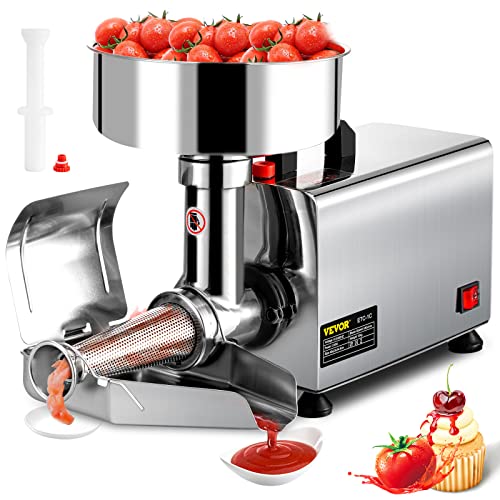
- 370W motor for powered batch processing
- 304 stainless-steel food-contact parts
- Large funnel with adjustable discharge trough
Best For: Small sauce makers and farm stands processing tomatoes and fruit
High-Volume Sauce Pick

- Large hopper for fewer refills
- Separates peels and seeds in one pass
- Tool-free disassembly for rinsing
Best For: Batch tomato sauce, puree, jam, and seasonal canning
Manual Puree Pick
Norpro 642 Stainless Chinois Set

- Fine-perforated cone for smooth purees
- Includes pestle and hands-free stand
- Works over 4- to 10-quart containers
Best For: Manual straining of sauces, stocks, jellies, and cooked produce
Best Versatile Clamp Model

- Hand crank or included electric motor
- 1.3 mm screen for skins and seeds
- Five-year warranty and sturdy clamp mount
Best For: Small-batch sauce, puree, jam, and juice preparation
Best Manual Chinois Set
Stainless Steel Chinois Strainer

- Includes strainer, stand, and wooden pestle
- Fine perforations for smooth sauces and purees
- 2-quart capacity with compatible pan stand
Best For: Manual small-batch straining and puree preparation
Best High-Output Electric Option
ETC-1C Tomato Strainer Machine

- 450W motor with 200-350 lb/h stated output
- 304 stainless steel food-contact parts
- Wide chute and tool-free cleaning design
Best For: Large-batch tomato, jam, juice, and soft-fruit processing
Best Small-Batch Colander
Gulex 5-Quart Stainless Steel Colander

- 5-quart size for food trucks and small restaurants
- Fine 1.5 mm mesh helps retain small foods
- Stable, rust-resistant 304 stainless steel design
Best For: Pasta, produce, and everyday draining
Best for Smooth Sauces
Norpro Stainless Steel Chinois Strainer

- Fine mesh for sauces, stocks, soups, and purees
- Hook stabilizes it over bowls or pots
- Dishwasher-safe stainless steel construction
Best For: Silky sauces, stocks, and fruit purees
Best Dual-Size Prep Set
Extra Fine Mesh Stainless Steel Strainers

- Two sizes for varied prep quantities
- Fine mesh filters oils, soups, grains, and more
- 304 stainless steel with welded handles
Best For: Versatile liquid filtering and ingredient prep
Commercial Tomato Milling Pick – VBENLEM 370W Tomato Strainer
For small businesses needing food strainer machines for small businesses, the VBENLEM electric tomato strainer is designed for bulk sauce and fruit processing. Its 370W pure copper motor, stainless-steel food-contact parts, and adjustable discharge trough support efficient tomato milling and sauce production.
Best For: Small sauce makers, farm stands, and businesses processing tomatoes, berries, or other fruits into sauces and jams.
Pros:
- Processes tomatoes and fruits for ketchup, sauces, and jams.
- 304 stainless-steel food-contact components are easy to disassemble and clean.
- Large 9-inch funnel and adjustable trough support smoother feeding and discharge.
- Low-noise operation and a 370W motor suit frequent batch processing.
Cons:
- At 22 pounds, it is less convenient to move than a manual strainer.
- Its 110V electric design requires access to a compatible outlet.
This is a practical choice when a small operation needs powered tomato milling rather than hand straining. Its durable construction and sauce-focused design make it especially suitable for repeated seasonal processing.
Fine-Mesh Prep Pick – Anaeat 4.73-Inch Stainless Strainer
For small businesses seeking compact food strainer machines for small businesses, the Anaeat fine-mesh strainer is a simple manual option for finishing and filtering ingredients. Its 0.5-millimeter stainless-steel mesh can sift dry ingredients, separate seeds from sauces, and strain tea, juice, pasta, and produce.
Best For: Bakeries, cafés, prep kitchens, and small food businesses needing a compact strainer for ingredients, sauces, beverages, and pasta.
Pros:
- Fine mesh helps remove small particles and seeds from sauces and liquids.
- Long, double-riveted handle provides a secure grip and helps keep hands away from hot water.
- Lightweight, compact design is easy to store or hang.
- Dishwasher-safe construction simplifies cleanup.
Cons:
- Manual 4.73-inch size is intended for smaller quantities.
- It does not provide powered or continuous batch processing.
This strainer is best viewed as a versatile finishing tool rather than a production-scale machine. It works well alongside other equipment when precise sifting or small-batch filtering is important.
High-Volume Sauce Pick – VEVOR 370W Tomato Strainer
For small businesses comparing food strainer machines for small businesses, the VEVOR electric tomato strainer emphasizes high-volume sauce production. Its 370W motor, large hopper, and stainless-steel filter screen are built to separate peels and seeds from tomatoes, fruit, and vegetables in a single pass.
Best For: Small commercial kitchens, farm operations, and seasonal canning businesses processing large batches of tomato sauce, puree, or jam.
Pros:
- Separates peels and seeds for smoother sauces, purees, and juice.
- Large hopper reduces the need for frequent refilling.
- Stainless-steel hopper, screen, tray, and guard support frequent use.
- Core components disassemble without tools for quick rinsing.
Cons:
- Tomatoes should be cut into small pieces to help reduce clogging.
- Its approximately 21.7-pound weight may limit portability.
The VEVOR is a strong fit for operators who value throughput and simpler cleanup. It is more appropriate for recurring batch work than occasional household straining, especially during harvest or canning seasons.
Manual Puree Pick – Norpro 642 Stainless Chinois Set
For small businesses that prefer manual food strainer machines for small businesses, the Norpro 642 chinois provides controlled straining without electricity. The fine-perforated stainless-steel cone, wooden pestle, and hands-free stand are suited to smooth sauces, stocks, jellies, and other cooked foods.
Best For: Small kitchens, bakeries, caterers, and makers of sauces, stocks, jellies, or baby food who process moderate quantities manually.
Pros:
- Fine perforations help remove seeds, skins, fibrous pulp, and solids.
- Wooden pestle is shaped to press cooked fruits and vegetables efficiently.
- Tripod stand supports hands-free straining over 4- to 10-quart containers.
- Stainless steel resists corrosion from acidic tomatoes, berries, and citrus.
Cons:
- Manual pressing requires more labor than an electric mill.
- Hand washing is recommended.
- The stand and cone require counter or storage space when assembled.
This set suits businesses that value hands-on control, quiet operation, and a straightforward workflow. It is a practical alternative to powered equipment when batch sizes fit its pot and bowl range.
Best Versatile Clamp Model – Johnny Apple Sauce Maker
For small businesses seeking food strainer machines for small businesses, the Johnny Apple Sauce Maker offers flexible batch preparation in a compact clamp-mounted design. It can separate skins and seeds from fruits and vegetables for sauces, purees, juices, jams, soups, and more.
Best For: Small-batch producers who want both hand-crank and electric operation for varied produce processing.
Pros:
- Included electric motor provides an alternative to hand-cranking.
- 1.3 mm apple/tomato screen separates skins and seeds for smooth preparations.
- Sturdy cast aluminum body, stainless steel screen, and five-year warranty.
- Clamp fits countertops from 3/4 to 2-1/8 inches thick.
Cons:
- Clamp-based mounting requires a suitable countertop.
- Its 1.3 mm screen is supplied for apple and tomato processing rather than multiple screen sizes.
This is a practical choice when versatility and countertop mounting matter more than fully automatic, high-volume operation. The dual operating options also make it adaptable for different preparation tasks.
Best Manual Chinois Set – Stainless Steel Chinois Strainer
Among food strainer machines for small businesses, this stainless steel chinois set suits operations that prefer hands-on processing and straightforward cleanup. The cone strainer, stand, and wooden pestle help produce smooth sauces, soups, stocks, baby food, and desserts.
Best For: Small kitchens and prep stations needing a manual strainer for sauces, purees, stocks, and canning.
Pros:
- Complete set includes an 18/8 stainless steel strainer, stand, and wooden pestle.
- Fine perforations retain seeds, skins, pulp, and coarse solids.
- Stand accommodates suitable 4- to 10-quart pans and the cone holds about 2 quarts.
- Metal components are dishwasher safe.
Cons:
- Manual pressing is less convenient for continuous or high-volume production.
- The wooden pestle is recommended for hand washing.
This set is best for controlled, smaller batches where operator control and a simple workflow are priorities. Its stand helps position the cone over compatible pots and bowls during straining.
Best High-Output Electric Option – ETC-1C Tomato Strainer Machine
For businesses handling larger harvests or production runs, this electric option stands out among food strainer machines for small businesses. Its 450W motor, 304 stainless steel food-contact parts, and continuous-feed design are suited to tomato sauce, jam, juice, and soft-fruit processing.
Best For: Small businesses and serious canners processing large batches of tomatoes, berries, and soft fruits.
Pros:
- Automatic 450W pure copper motor is rated for 200-350 pounds per hour.
- 304 stainless steel food-contact components support durability and corrosion resistance.
- 8.5-inch feed chute supports continuous feeding with a safety pusher.
- Tool-free assembly, dishwasher-safe detachable parts, and waterproof switch simplify use and cleanup.
Cons:
- At 20.9 pounds, it is less portable than smaller manual or clamp-based strainers.
- Its 20.87-inch length and 9.84-inch width require dedicated counter space.
This is the strongest fit for higher-throughput work when automatic operation and faster processing are more important than a compact footprint. Stainless steel construction and removable parts further support frequent use.
Best Small-Batch Colander – Gulex 5-Quart Stainless Steel Colander
For small businesses looking for food strainer machines for small businesses without adding complicated equipment, the Gulex 5-quart colander offers a straightforward way to drain pasta, produce, oils, and other foods. Its fine 1.5-millimeter mesh, footed base, and stainless steel construction suit routine prep in food trucks, small restaurants, or catering kitchens.
Best For: Pasta, produce, and general draining in compact commercial kitchens.
Pros:
- 5-quart capacity is practical for small restaurants and food trucks.
- Fine, closely spaced holes drain quickly while helping retain spaghetti and other small foods.
- 304 stainless steel construction resists rust and food-taste transfer.
- Footed base and solid ring help keep the colander stable during draining.
Cons:
- Its manual design is better for batch prep than high-volume automated processing.
- The 5-quart capacity may be limited for larger production runs.
The Gulex is a durable, dishwasher-safe option for businesses that need dependable everyday draining rather than a powered straining system. Its stable base and fine mesh make it especially useful for pasta and produce prep.
Best for Smooth Sauces – Norpro Stainless Steel Chinois Strainer
Among food strainer machines for small businesses, the Norpro chinois is a useful manual choice for kitchens that prioritize smooth sauces, stocks, soups, and fruit preparations. Its fine mesh cone strains and purees ingredients while the hook helps stabilize it over a bowl or pot.
Best For: Silky sauces, stocks, soups, jellies, jams, and purees.
Pros:
- Fine mesh is designed for smooth soups, sauces, bouillon, jellies, and desserts.
- Hook helps support the strainer on a bowl or pot during use.
- Stainless steel frame and mesh provide a durable, dishwasher-safe construction.
- Can also function as a colander for added kitchen versatility.
Cons:
- The cone shape is specialized for sauces and purees rather than broad, flat draining.
- Manual straining requires staff effort for larger batches.
This Norpro is a strong fit for small kitchens producing refined sauces or strained stocks. Its 8.5-inch depth and stabilizing hook make it more purpose-built for bowl-or-pot work than a standard colander.
Best Dual-Size Prep Set – Extra Fine Mesh Stainless Steel Strainers
For small businesses needing flexible food strainer machines for small businesses, this extra-fine mesh set provides two sizes for draining, filtering, and sifting. The strainers are designed to separate oil, grease, foam, and fine particles from soups and stews while also handling ingredients such as rice, grains, pasta, tea, and spices.
Best For: Multi-purpose liquid filtering and ingredient prep across different batch sizes.
Pros:
- Small-and-large set supports different prep quantities and tasks.
- Fine mesh captures small particles while allowing liquids to drain.
- Food-grade 304 stainless steel frame is designed to resist bending and deformation.
- Long welded handles provide grip, while hanging holes simplify storage and drying.
Cons:
- The supplied notes do not specify the exact capacity of each strainer.
- These are manual tools, so high-volume filtering may take more staff time.
This set offers broad utility for compact commercial kitchens that need one solution for soups, oils, grains, beverages, and produce. The two sizes and hanging handles make it practical for varied daily prep.
How We Picked These Food Strainer Machines for Small Businesses
We focused on equipment that can separate skins, seeds, pulp, or particles from common small-batch foods. The selection covers powered tomato presses for higher output, manual food mills for flexible production, and stainless-steel strainers for filtering, finishing, and occasional use.
Key considerations included stated capacity, motor power where applicable, material durability, stability, ease of feeding, cleaning requirements, and suitability for sauces, soups, jams, jellies, and purées. Because business needs vary widely, the list includes both commercial-style machines and lower-cost supporting tools.
Quick Comparison
- For regular sauce production: Choose a powered tomato strainer with a stainless-steel body and a motor sized for your expected batches.
- For occasional or low-volume work: A clamp-based food mill or chinois can provide control without the cost or storage demands of an electric machine.
- For final filtering and prep: Fine-mesh strainers and colanders are useful for removing small particles, draining ingredients, and finishing a smooth product.
- For large batches: Prioritize feed capacity, continuous operation, stable mounting, and readily available replacement parts.
Key Buying Factors
Capacity and Workflow
Check the manufacturer’s hourly rating, but treat it as a maximum rather than a guaranteed everyday output. A machine that can process more than your typical batch may reduce waiting time, while an oversized unit can take up valuable counter space. Consider how quickly you can wash, prep, feed, and collect the food as well as the machine’s headline capacity.
Motor, Materials, and Stability
Electric models are generally better for repeated processing, especially when handling tomatoes or other soft produce at scale. Stainless steel is desirable for food-contact surfaces because it is durable and easier to sanitize. A secure clamp, broad base, stand, or non-slip feet also matter: movement during operation makes feeding slower and can create spills.
Screen Options and Food Compatibility
Look for a screen size and design suited to the texture you want. Coarser screens may process fibrous produce more quickly, while fine mesh is better for smooth sauces and filtering. Confirm that the machine is intended for your ingredients, particularly if you plan to process harder produce, thick mixtures, or hot foods.
Cleaning and Maintenance
Removable screens, hoppers, paddles, and collection trays simplify sanitation. Before buying, verify which parts are dishwasher safe and which must be hand-washed. For business use, also check whether replacement screens, seals, motors, and other wear parts are available.
Who Should Buy Which Food Strainer Machines for Small Businesses?
Choose a powered tomato mill if you produce sauces, passata, or purées frequently and want faster, more repeatable processing. Choose a manual clamp-style mill if you need moderate capacity, hands-on control, and a compact setup. Choose a chinois with a pestle for finishing soups, custards, stocks, and small batches where precision matters more than speed. Choose a fine-mesh colander or strainer as an affordable preparation and finishing tool rather than a replacement for a dedicated milling machine.
For most small businesses, the best setup depends on production frequency: invest in powered equipment for recurring volume, then add a fine strainer for final texture control and cleanup flexibility.