The best corn grinders make it easier to process dry corn, wheat, rice, and other grains at home or on the farm. The right model depends on how much you grind, how fine you need the results, and whether you prefer manual control or electric speed.
We’ve selected 10 corn grinders ranging from compact hand-crank cast-iron mills to high-capacity electric machines. Use the guide below to narrow the choices by capacity, power, adjustability, cleanup, and intended use.
Best 10 Corn Grinders Picks for 2026
Best Manual Corn Grinder

- Durable cast iron body with tin plating
- Adjustable grind settings and high hopper
- Clamps to tables 1/2 to 2 inches thick
Best For: Home users milling corn and other ingredients in small batches
Best High-Capacity Corn Grinder
15.8-Gallon Electric Feed Mill

- 60-liter hopper for fewer refills
- Seven interchangeable sieves
- 1300-watt motor for dry grain and feed
Best For: High-volume farm and homestead feed preparation
Best Traditional Corn Grinder

- Cast iron construction with tin plating
- Coarse-to-fine adjustment
- Includes clamp, hopper, handle, and stabilizing pad
Best For: Home cooks making corn, masa, flour, and specialty recipes
Best Mid-Size Corn Grinder

- 25-liter hopper for moderate batch sizes
- Seven sieves for adjustable particle size
- 1500-watt motor for dry grains and feed
Best For: Small farms needing electric grinding without a 60-liter hopper
Traditional Pick
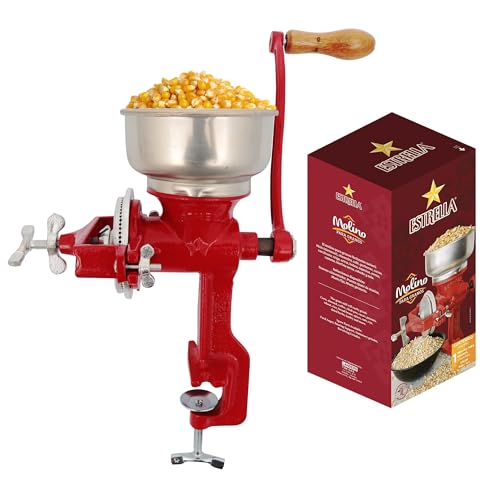
- Cast iron hand-crank design
- Adjustable settings for multiple grains
- Clamps to counters up to 1.5 inches
Best For: Traditional masa, tortilla, and homemade recipe preparation
High-Power Choice
VEVOR 3000W Electric Corn Mill

- 3000W motor for continuous dry grinding
- Adjustable grinding thickness
- 500 g capacity with cast iron components
Best For: Powered grinding of grains, corn, spices, and dry ingredients
Best Electric Farm Mill

- 25-liter capacity for larger batches
- Five sieves for varied fineness
- Detachable design for transport and cleaning
Best For: Farm and household dry-grain milling
Best Manual Option

- Electricity-free grinding
- Adjustable texture control
- Stable table clamp and dust cover
Best For: Small batches and off-grid milling
Best High-Capacity Mill

- Processes about 110 pounds per hour
- 30–300 mesh fineness adjustment
- Heavy-duty cast-iron construction
Best For: High-volume dry-grain and spice grinding
Best Manual Corn Grinder – Victoria Cast Iron Grain Mill
If you want a traditional option for smaller batches, this Victoria is one of the more versatile corn grinders to consider. Its cast iron body, adjustable screw, high hopper, and hand crank are suited to corn, grains, seeds, spices, and other dry ingredients, though it is not designed for superfine milling.
Best For: Home users who want a durable manual mill for corn, masa-style grinding, and assorted small-batch ingredients.
Pros:
- Heavy-duty cast iron construction with double tin plating.
- Adjustable coarseness and fineness settings.
- Clamps to tables 1/2 to 2 inches thick and includes a non-slip protector.
- Large 2400-gram capacity and versatile ingredient compatibility.
Cons:
- Manual operation requires physical effort.
- Cannot grind to a superfine texture or turn whole wheat into fine powder.
This is a practical, traditional choice when reliability and versatility matter more than speed or ultra-fine flour. Its high hopper and sturdy mounting setup make it especially useful for occasional household milling.
Best High-Capacity Corn Grinder – 15.8-Gallon Electric Feed Mill
For farms and homesteads processing substantial quantities, this electric model offers a much larger hopper than typical household corn grinders. Its 60-liter capacity, 1300-watt motor, and seven interchangeable sieves support customized grinding for dry corn, livestock feed, and multiple grains.
Best For: Small farms and homesteads preparing large batches of poultry or livestock feed.
Pros:
- Large 60-liter (15.8-gallon) hopper reduces refill frequency.
- Seven sieves provide multiple particle-size options.
- Handles dry corn, wheat, rice, barley, sorghum, soybeans, and more.
- Simple start-and-stop controls and a built-in carrying handle.
Cons:
- Designed for dry materials only.
- Screens must be replaced only after unplugging the machine and clearing any clog.
- Its large capacity may be excessive for occasional kitchen use.
This is the strongest fit when throughput and feed preparation are priorities. The large hopper and sieve selection make it more farm-oriented than compact manual corn grinders, while the safety instructions require careful operation.
Best Traditional Corn Grinder – Corona Manual Grain Mill
The Corona manual grain mill is a classic choice for shoppers seeking versatile corn grinders without relying on electricity. Its cast iron construction, high hopper, adjustable grind, countertop clamp, and included stabilizing pad suit homemade flour, masa, cracked grains, coffee, and spices.
Best For: Home cooks who want a traditional hand-crank mill for corn, masa, flour, and varied dry ingredients.
Pros:
- Heavy-duty cast iron body with food-safe tin plating.
- Adjusts from coarse to fine textures.
- Includes hopper, handle, clamp, mounting hardware, and rubber pad.
- Large-capacity hopper and broad ingredient compatibility.
Cons:
- Manual grinding is slower and more labor-intensive than electric milling.
- Clamp fits surfaces up to 1.45 inches thick, limiting mounting options.
- Requires cleaning after use and dry storage.
Choose this model if you value hands-on control, straightforward maintenance, and a broad range of uses. It is especially appealing for traditional recipes and off-grid or electricity-free milling.
Best Mid-Size Corn Grinder – 6.6-Gallon Electric Feed Mill
This red electric feed mill offers a middle ground for buyers who need more capacity than a manual mill but less bulk than a 60-liter machine. It uses a 25-liter hopper, seven sieves, and a 1500-watt motor to process dry corn and other grains for feed or flour-related tasks.
Best For: Small farms and homesteads that need electric batch grinding with moderate capacity.
Pros:
- 25-liter (6.6-gallon) hopper supports larger batches.
- Seven sieves allow customized particle sizes.
- Suitable for dry corn, wheat, rice, barley, sorghum, soybeans, and other grains.
- Includes simple start-and-stop operation and a built-in handle.
Cons:
- Use is limited to dry materials.
- Screen changes require unplugging the mill and addressing clogs first.
- The listed 230-volt power requirement may limit compatibility with some setups.
This model makes sense for users who want electric convenience without stepping up to the largest hopper size. Verify your available power connection before buying, and use the included sieves to match the grind to your feed or grain needs.
Traditional Pick – Estrella Manual Corn Grinder
For shoppers comparing corn grinders, the Estrella Manual Grain Mill offers a traditional hand-crank approach to grinding corn, nixtamal, masa, and other coarse ingredients. Its cast iron construction and adjustable settings suit hands-on kitchen preparation.
Best For: Making masa, tortillas, tamales, pupusas, arepas, and other homemade recipes using a manual grinder.
Pros:
- Heavy-duty cast iron construction
- Grinds corn, nixtamal, chickpeas, wheat, rice, coffee beans, spices, and soybeans
- Adjustable grinding settings
- Clamps to countertops up to 1.5 inches thick and has removable parts for cleaning
Cons:
- Manual operation requires hands-on effort
- Countertop clamping limits placement to compatible surfaces
This is a practical choice for cooks who value traditional preparation and do not need an electric motor. The durable build and broad ingredient compatibility make it a versatile option for small-batch homemade cooking.
High-Power Choice – VEVOR 3000W Electric Corn Mill
Among corn grinders, the VEVOR Electric Grain Mill stands out for shoppers who want motorized dry grinding and adjustable output thickness. Its 3000W motor, cast iron grinding plates, and 500 g capacity are suited to repeated grinding of grains and other dry ingredients.
Best For: High-powered electric grinding of corn, wheat, rice, sorghum, soybeans, spices, and similar dry ingredients.
Pros:
- Powerful 3000W electric motor with 110V operation
- Adjustable thickness for different grinding results
- Cast iron stand and grinding disc with stainless steel funnel
- 500 g capacity and funnel-shaped feeding design
Cons:
- Heavy 46.7-pound construction
- Large industrial-style footprint at 18.31 by 10.04 by 28.15 inches
- Designed for dry grinding rather than general wet processing
This model makes the most sense when speed and powered operation matter more than portability. Its substantial size and weight are trade-offs for a commercial-style grinder with adjustable thickness control.
Large-Hopper Value – High Hopper Manual Corn Grinder
This manual option is one of the more convenient corn grinders for home use because its large hopper reduces the need for frequent refilling. The adjustable grinding plate and sturdy metal construction support corn, malt, beans, coffee, animal feed, and home-brewing tasks.
Best For: Home grain grinding, dough preparation, poultry feed, and small-scale brewing with a manual grinder.
Pros:
- Large hopper holds more grain between refills
- Adjustable grinding plate for different particle sizes
- Auger is designed to grind grains evenly and thoroughly
- Adjustable base fits tables with different thicknesses
Cons:
- Manual operation requires physical effort
- Table-edge installation is required for operation
- Intended for grains and dry ingredients rather than powered grinding
Choose this grinder if you want a straightforward manual tool with a hopper sized for more efficient batches. Its flexible mounting base and adjustable output make it useful for varied household and hobby applications.
Best Electric Farm Mill – 1000W Corn Grinder
For buyers comparing corn grinders for household or farm use, this 1000-watt electric mill offers a practical way to process dried corn, grains, spices, and other dry ingredients. Its 25-liter capacity and included sieves make it suited to both animal-feed preparation and home milling.
Best For: Farms and households that need an electric grinder for dried corn, animal feed, and multiple grain textures.
Pros:
- 1000-watt motor with a 25-liter capacity for larger batches.
- Includes five sieves for selecting different grinding finenesses.
- Detachable hopper and bucket make transport and water-based cleaning easier.
- Works with dried corn, wheat, rice, spices, pepper, and other dry grains.
Cons:
- Designed for dry materials; the motor must be protected from water.
- At 14 pounds, it may be less convenient to move than a compact countertop mill.
This is a versatile choice when throughput and flexibility matter more than a small footprint. The interchangeable sieves are especially useful for switching between feed and finer household milling.
Best Manual Option – Hand-Crank Corn Grinder
This manual VEVOR mill is one of the more straightforward corn grinders for shoppers who want control without electricity. Its cast-iron body, table clamp, and adjustable grinding disc support steady small-batch work with corn, grains, spices, nuts, and coffee beans.
Best For: Small batches, off-grid use, and users who prefer manual control over grinding speed and texture.
Pros:
- Uses no electricity, helping preserve flavor by avoiding heat buildup.
- Adjustable disc lets you change the texture from coarser to finer results.
- Table clamp fits surfaces with a 0.79–1.58-inch opening range.
- Powder-coated cast iron resists rust and wear.
Cons:
- The low hopper is intended for small batches rather than high-volume processing.
- Manual cranking requires more effort than an electric grinder.
Choose this model when portability of power and hands-on control are priorities. The dust cover and secure clamp make it particularly practical for kitchen or workshop use, while repeated passes can produce a finer texture.
Best High-Capacity Mill – 1500W Corn Pulverizer
For shoppers seeking corn grinders for frequent or larger-volume work, this 1500-watt electric pulverizer emphasizes speed and fine-control adjustment. It handles dry grains, corn, coffee, and spices, with a stated processing capacity of about 110 pounds per hour.
Best For: Farms, ranches, homes, or lab settings that need fast processing of dry materials in larger batches.
Pros:
- 1500-watt motor runs at 1400 RPM and processes about 110 pounds per hour.
- Adjustable knob provides a 30–300 mesh fineness range.
- Cast-iron grinding plates and stainless steel feed port support durable use.
- Non-slip shock-absorbing feet and cooling vents promote stable operation.
Cons:
- Not suitable for wet, oily, or sticky materials.
- At 47.2 pounds, it is substantially less portable than smaller mills.
- Its industrial form factor may be excessive for occasional household grinding.
This model makes the most sense when speed and a broad fineness range outweigh portability. Its heavy construction and high stated output suit demanding dry-grinding tasks, provided the materials remain dry and non-sticky.
How We Picked These Corn Grinders
We focused on the features that matter most in everyday grain processing: grinding method, hopper and output capacity, motor power, construction, included screens or sieves, grind adjustment, stability, and overall versatility. The selection includes manual mills for occasional household use and electric models suited to larger batches of corn or animal feed.
Because product specifications can vary by seller and configuration, confirm the current capacity, included accessories, voltage, and approved grain types before ordering. Dry-grain mills are generally not designed for wet corn or oily ingredients unless the manufacturer specifically says otherwise.
Quick Comparison
| Type | Best For | Main Advantage | Trade-Off |
|---|---|---|---|
| Manual cast-iron mill | Small household batches | No electricity required | Slower and labor-intensive |
| Electric feed grinder | Chicken feed and larger batches | Fast processing | Requires power and safe setup |
| High-hopper manual mill | Frequent hand grinding | Convenient loading | Still limited by manual output |
| Commercial-style electric mill | Fine powders and heavy use | High power and adjustability | Louder, heavier, and often costlier |
Key Buying Factors for Corn Grinders
Manual or Electric Operation
Manual grinders are dependable during power outages and work well for small quantities, but they require effort and a secure mounting surface. Electric grinders are better for repeated batches, feed preparation, and users who value speed. Check whether the motor and electrical requirements match your outlet and intended duty cycle.
Capacity and Throughput
Hopper size affects how often you need to reload, while actual output depends on corn dryness, grind setting, motor strength, and the machine’s design. Large advertised capacities do not always mean the grinder can run continuously at maximum load. Choose a model with extra capacity if you regularly prepare feed for multiple animals.
Grind Control and Included Screens
Adjustable thickness or multiple sieves provide more flexibility for coarse cracked corn, meal, flour, and animal feed. Look for clearly identified screens and a design that allows simple changes without excessive disassembly.
Construction, Stability, and Maintenance
Cast iron is durable and stable, but it is heavy and may require seasoning or rust prevention. Electric models should have a firm base, protected switches, and adequate ventilation. Before buying, check how easily the hopper, grinding chamber, and screens can be cleaned. Never place hands near moving parts, and follow the manufacturer’s instructions for dry ingredients and operating limits.
Who Should Buy Which Corn Grinders?
Choose a manual cast-iron mill if you grind modest amounts, want a non-electric backup, or prefer a traditional hand-operated tool. A high-hopper design is especially useful when loading convenience matters.
Choose a 6.6- to 15.8-gallon electric feed grinder if you prepare corn, wheat, rice, or poultry feed in larger batches and have a suitable power source. For finer powders or more demanding processing, a high-wattage commercial-style electric mill with adjustable thickness may be the better fit.
If you are unsure, prioritize the smallest model that comfortably handles your normal batch size. It will usually be easier to store, clean, and operate than an oversized grinder.