Choosing the right mixer can make bakery prep faster, more consistent, and far less tiring. The best countertop dough mixer for bakery use should match your batch size, dough type, and daily workload.
Below, we focus on capacity, motor strength, mixing style, and overall value so you can narrow the field with confidence.
Best 10 Countertop Dough Mixer for Bakery Picks for 2026
Heavy-Duty Commercial Batch Mixer

- 30-gallon bowl handles larger bakery batches
- 1250W motor with 3 speed settings
- 304 stainless steel parts are easy to clean
Best For: High-volume bakeries and pizzerias
NSF Commercial Countertop Pick

- NSF certified for commercial use
- 8-quart bowl with bowl-lift stability
- 10 speeds and spiral dough hook included
Best For: Small bakeries needing a compact commercial mixer
Spiral Dough Specialist

- Spiral mixing technology targets better gluten development
- 58 speed settings offer precise control
- Includes four attachments for mixing and whisking
Best For: Serious bakers wanting spiral-mixer performance
Heavy-Duty Commercial Pick
15Qt Commercial Stand Mixer for Bakeries and Pizzerias
- 15-gallon bowl supports larger batch mixing
- 660W motor with 3 speed settings
- 304 stainless steel build with safety cover
Best For: Bakeries and pizzerias needing a high-capacity commercial dough mixer
Versatile All-Purpose Pick
Cuisinart 5.5-Quart 12-Speed Stand Mixer
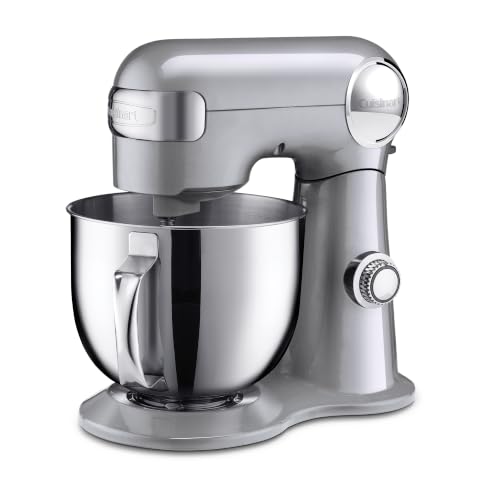
- 12 speeds for broad mixing control
- 500W motor with die-cast metal body
- Includes dough hook, whisk, paddle, and splash guard
Best For: Small-batch baking and kitchens that want one mixer for many tasks
Compact Smart Pick
5.3QT Stainless Steel Electric Dough Maker with Timer

- Automatic kneading with 5-40 minute timer
- Compact 5-liter stainless steel basin
- Touchscreen controls with 140-170 RPM range
Best For: Small-scale baking where a compact automated dough maker is preferred
Commercial Capacity Spiral Mixer
VEVOR 15Qt Commercial Food Mixer

- 15Qt stainless bowl for larger bakery batches
- 500W motor with 3 speeds, including dough-kneading low speed
- Includes dough hook, flat beater, wire whip, and a 30-minute timer
Best For: Bakeries and pizzerias needing a larger commercial mixer
Compact Digital Baker

- 650W motor with 8 speeds and a 15-minute timer
- 5QT bowl for cakes, breads, cookies, and muffins
- Tilt-head design with splash guard and suction cups
Best For: Home bakers wanting digital control in a compact mixer
Heavy-Duty Commercial Batch Mixer – 30Qt 1250W Stand Mixer
If you need a countertop dough mixer for bakery use that can handle real volume, this 30-quart commercial stand mixer is built for batch production. The 1250W motor, three-speed control, and stainless steel bowl make it a practical fit for bakeries working with bread dough, pizza dough, cream, and other mixed ingredients.
Best For: Bakeries, pizzerias, and commercial kitchens that need a large-capacity mixer for heavier doughs and frequent use.
Pros:
- Food-grade 304 stainless steel construction is corrosion-resistant and easy to wipe clean.
- Large 30-gallon bowl can mix up to 7.7 pounds of dough per batch.
- 1250W motor with 3 speeds is suited to both kneading and whipping tasks.
- Includes spiral dough hook, flat-bottom mixer, and stirring rod for different textures.
Cons:
- At 187.4 pounds, it is not a lightweight countertop option.
- Its large footprint may be excessive for small kitchens.
This is the most production-oriented option here, especially if your priority is capacity and durability over compact size. For bakeries that regularly work through larger dough batches, it offers the kind of build and power that supports daily commercial use.
NSF Commercial Countertop Pick – 8-Quart KitchenAid Mixer
KitchenAid KSM8990CU 8-Quart Commercial Countertop Mixer, 10-Speed, Gear-Driven, Contour Silver
Check Price On AmazonThis commercial countertop dough mixer for bakery prep is a strong choice when you want a proven compact workhorse. The 8-quart bowl, 10-speed control, and bowl-lift design are aimed at stable mixing for batter, yeast dough, and other small-to-large commercial batches.
Best For: Small bakeries and commercial kitchens that want a compact, NSF-certified mixer for everyday dough and batter work.
Pros:
- NSF certified for commercial use.
- 8-quart stainless steel bowl suits small to large batches.
- Bowl-lift design helps keep heavy ingredients stable while mixing.
- High-efficiency DC motor is designed for longer mixing and kneading with less heat buildup.
Cons:
- 500W power is modest compared with larger commercial mixers.
- May be less suitable for very large batch production.
For bakeries that need a reliable countertop format without jumping to industrial scale, this model is a balanced option. It focuses on stability, commercial certification, and practical capacity rather than raw bulk output.
Compact Dough Proofing Mixer – 7.4QT DoughChief
If your countertop dough mixer for bakery-style results needs to fit a smaller kitchen, this 7.4-quart dough maker is geared toward home baking and compact spaces. It mixes bread, pizza, and pasta dough, while the built-in ferment mode helps support proofing in a single countertop unit.
Best For: Home bakers and small-batch users who want mixing and fermentation in one compact machine.
Pros:
- Mix, ferment, and combined modes add flexibility for dough prep.
- Hand-kneading simulation is designed to help gluten develop naturally.
- Constant-temperature ferment mode holds 77–100°F for proofing support.
- 7.4-quart stainless steel bowl and removable parts make cleanup easier.
Cons:
- 1 speed limits control compared with multi-speed mixers.
- Designed for home baking rather than heavy commercial output.
This is the most specialized dough-prep option in the group, especially if fermentation matters as much as mixing. It is best viewed as a compact, convenience-focused machine rather than a high-volume bakery mixer.
Spiral Dough Specialist – Ooni Halo Pro Mixer
For buyers who want a countertop dough mixer for bakery-quality results, this spiral mixer stands out for its professional-style dough handling. The rotating bowl, spiral hook, and removable breaker bar are designed to build stronger gluten networks, while the included attachments also let it handle whisking and beating tasks.
Best For: Serious home bakers and small bakeries that want spiral-mixing performance for bread and pizza dough.
Pros:
- Professional spiral mixing technology is aimed at stronger gluten development.
- 58 speed settings provide very fine control, from 60 RPM to over 1,000.
- Includes four attachments for dough, beating, whisking, and flexible mixing.
- Compact 7.3-quart capacity works well for focused dough prep.
Cons:
- 7.3-quart capacity is smaller than true commercial mixers.
- Primarily optimized for dough performance rather than bulk production.
This is the most technique-driven mixer in the roundup, and it makes sense for users who care about dough structure above all else. If you want bakery-style dough in a smaller footprint, the spiral system and speed precision are major strengths.
Heavy-Duty Commercial Pick – 15Qt Commercial Stand Mixer for Bakeries and Pizzerias
If you need a countertop dough mixer for bakery production, this 15-quart commercial stand mixer is built for larger batches and heavier doughs. The 660W motor, three speed settings, and included dough hook make it a practical fit for bakeries that want a sturdy, high-capacity machine for routine mixing tasks.
Best For: Bakeries, pizzerias, and commercial kitchens that need a large-capacity mixer for dough and mixed prep.
Pros:
- 15-gallon bowl handles commercial batch production and mixes up to 3.5 pounds of dough per operation.
- 660W motor with 3 speeds gives low-speed kneading and higher-speed whipping options.
- Food-grade 304 stainless steel construction is corrosion-resistant and easy to clean.
- Includes multiple tools for different textures, including a spiral dough hook, flat-bottom mixer, and stirring rod.
Cons:
- Its 138.9-pound build makes it far less portable than smaller countertop mixers.
- 110V operation and commercial size may not suit light home use.
- The large footprint needs dedicated counter or floor space.
Overall, this is the most production-focused option here, especially if your bakery needs capacity and motor strength over portability. The safety cover, adjustable bowl height, and anti-slip base add to its commercial appeal.
Versatile All-Purpose Pick – Cuisinart 5.5-Quart 12-Speed Stand Mixer
For buyers comparing a countertop dough mixer for bakery-style prep, this Cuisinart stand mixer is a versatile mid-size choice. Its 12 speeds, 500W motor, and included dough hook make it useful for dough plus a wide range of mixing jobs, while the 5.5-quart bowl keeps it compact enough for everyday countertop use.
Best For: Small bakeries, serious home bakers, and mixed-use kitchens that want flexibility in a compact stand mixer.
Pros:
- 12 speeds provide fine control for tasks from kneading to whipping.
- 500W motor and die-cast metal construction offer solid everyday performance.
- Includes a dough hook, whisk, flat paddle, and splash guard with pour spout.
- 5.5-quart stainless steel bowl is a practical size for smaller-batch baking.
Cons:
- Smaller capacity than commercial bakery mixers.
- Not as specialized for dough-only work as dedicated dough makers.
- Optional attachments may be useful, but they are sold separately.
This is the most flexible general-purpose mixer in the group, especially if your bakery needs one machine to do more than just dough. It balances size, speed control, and included accessories well for lighter commercial or heavy home use.
Compact Smart Pick – 5.3QT Stainless Steel Electric Dough Maker with Timer
If you want a countertop dough mixer for bakery prep but prefer a smaller footprint, this 5.3-quart dough maker is a space-saving option. It uses a 200W motor, a 140-170 RPM range, and a built-in microcomputer timer to automate kneading, which can be especially handy for straightforward dough workflows.
Best For: Small bakeries and home bakers who want a compact, automated dough kneader with timer control.
Pros:
- Built-in digital timer supports automatic kneading from 5 to 40 minutes.
- 5-liter stainless steel basin is compact but still useful for batch prep.
- Touch controls make operation simple and hands-free.
- 304 stainless steel, ABS, and silicone construction is designed for durability.
Cons:
- 200W power is lower than larger commercial mixers.
- Capacity is smaller than full bakery stand mixers.
- Noise is listed at about 75dB, which may be noticeable in quiet spaces.
This model makes sense if automation and countertop convenience matter more than heavy commercial capacity. It is best viewed as a compact dough specialist for smaller-scale bakery prep rather than a full production mixer.
Commercial Capacity Spiral Mixer – VEVOR 15Qt Commercial Food Mixer
If you need a countertop dough mixer for bakery-style batches, this VEVOR commercial mixer is built for heavier jobs. Its 15Qt stainless bowl, 500W motor, and low-speed dough-kneading setting make it a practical choice for pizza dough, bread dough, and other dense mixes in commercial kitchens.
Best For: Bakeries, pizzerias, and kitchens that need a larger-capacity mixer for dough and general mixing.
Pros:
- 15Qt stainless bowl handles up to 1.5 kg / 3.3 lbs of food at once.
- 500W gear-driven motor with 3 speeds, including 113RPM for kneading dough.
- Comes with dough hook, flat beater, and wire whip for different recipes.
- Timer up to 30 minutes and automatic shutoff when the shield is not secured.
Cons:
- Large footprint and 127.9 lb weight make it less portable.
- Designed more for commercial use than small home kitchens.
This is the strongest pick here if capacity and dough-handling matter most. It is less about compact convenience and more about steady, repeatable mixing for bakery workloads.
Compact Digital Baker – CUSIMAX 5-Quart Stand Mixer
If you want a countertop dough mixer for bakery projects without moving up to a commercial unit, this CUSIMAX stand mixer offers a balanced home-baking setup. The 650W motor, 8 speeds, and 15-minute timer give you useful control for breads, cakes, cookies, and other everyday baking tasks.
Best For: Home bakers who want a compact mixer with digital controls and a timer.
Pros:
- 650W motor and 8 speeds provide flexible mixing control.
- 15-minute timer adds convenience for timed baking tasks.
- 5QT stainless steel bowl is sized for cakes, breads, cookies, and muffins.
- Tilt-head design and suction cups help with access and stability.
Cons:
- 5QT capacity is smaller than commercial bakery-style mixers.
- Plastic housing is less rugged than metal-bodied alternatives.
This model makes sense if you want a straightforward mixer with digital features and a manageable size. It is best for regular baking rather than high-volume production.
Quiet Heavy-Duty Kneader – 6.5QT Tilt-Head Stand Mixer
For a countertop dough mixer for bakery-style baking at home, this 6.5QT stand mixer focuses on strong kneading and quiet operation. Its pure copper motor, 10 speeds plus pulse, and planetary mixing design are aimed at handling bread dough, pizza dough, and other thicker mixes with consistent results.
Best For: Home bakers who want a quieter heavy-duty mixer for dough, batters, and meringues.
Pros:
- Pure copper motor is built for high-torque kneading of heavy dough.
- Operates under 55dB for quieter mixing sessions.
- 10 speeds plus pulse mode give precise control for different textures.
- 6.5QT stainless bowl and planetary mixing help blend ingredients evenly.
Cons:
- 300W wattage is lower than some other mixers in this roundup.
- Best suited to home baking rather than large commercial batches.
This is a strong middle-ground option for bakers who want more control and quieter operation. It stands out for dough performance while still covering lighter mixing jobs well.
A Countertop Dough Mixer for Bakery work should do more than spin ingredients. It needs enough torque for stiff doughs, a bowl size that fits your batch routine, and controls that make repeat results easy to achieve.
How We Picked the Best Countertop Dough Mixer for Bakery
We looked for models with practical bakery-friendly features such as sturdy construction, reliable dough-handling performance, multiple speed settings, timer functions, and bowl sizes that suit either small-batch production or higher-volume prep. We also favored mixers that offer a sensible balance of price, capacity, and durability.
Quick Comparison
Smaller 5- to 8-quart mixers are a better fit for compact kitchens, specialty doughs, and lower-volume production. Mid-size models around 10 to 15 quarts offer more flexibility for growing bakeries. Large commercial units in the 15- to 30-quart range are the right choice for heavier output, repeated daily use, and thicker doughs that demand more power.
Key Buying Factors for a Countertop Dough Mixer for Bakery
Capacity and Batch Size
Choose a bowl size based on your normal production, not your largest occasional order. Oversizing can waste counter space, while undersizing creates bottlenecks.
Motor Power and Torque
Wattage helps, but torque and gear design matter more for dough. Dense bread and pizza dough need a mixer that can maintain speed under load without overheating.
Mixing Action
Spiral mixers are often preferred for dough because they develop gluten efficiently with less heat buildup. Planetary mixers are more versatile if you also need whisking, creaming, and general prep.
Speed Control and Timers
Multiple speeds and an integrated timer improve repeatability, especially when you are scaling recipes or training staff. For a busy bakery, these controls reduce guesswork.
Build Quality and Cleaning
Stainless steel bowls, durable housings, and removable attachments make cleaning easier and extend service life. If your kitchen is busy, easy maintenance matters as much as performance.
Who Should Buy Which Countertop Dough Mixer for Bakery?
Home bakers and small cafés should look at compact 5- to 8-quart options. Growing bakeries and pastry shops usually benefit from 10- to 15-quart mixers that can handle everyday production without taking over the counter. Larger operations, pizzerias, and high-volume bakeries should prioritize the biggest commercial models for better throughput and stronger dough-handling capacity.
If you are shopping specifically for a Countertop Dough Mixer for Bakery use, the best choice is the one that matches your dough type, output level, and available space—not just the biggest machine you can fit.